E-mu Xtreme Lead-1
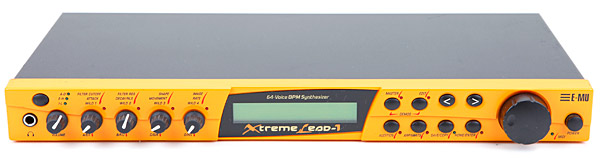
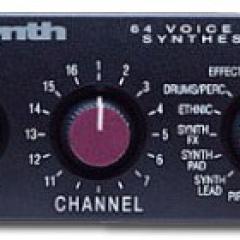
The Xtreme Lead-1 is E-mu's coolest lead synth and BPM synthesizer. Based off of the Audity 2000, the Xtreme Lead has the 32 MB "X-Lead" soundset ROM, 64-voice polyphony, 16 simultaneously available programmable arpeggiators, 12-pole digital filters, 24-bit dual effects, a memory expansion slot and a Turbo upgrade that can extend its features two-fold!
The XL-1 introduces E-mu's new SuperBEATS Mode, which allows you to effortlessly trigger, latch and unlatch synced loops and grooves from separate keys on your keyboard over 16 independent rhythm tracks. Great for live use by DJs and artists alike! Sounds of the Xtreme Lead-1 include techno basses, buzzed out synth leads, pads, dance drumkits, vocal stabs, hits, analog synths, DJ scratches, etc. The twelve assignable real-time front panel controls provide fast hands-on access.
Programming this beast can be tedious but it features the same new Modular PatchCord architecture as the Audity 2000 for extreme sound-sculpting capabilities. In addition, there are two outputs (expandable to six + S/PDIF with Turbo upgrade). For the all-in-one dance module, check out the new Xtreme Lead-1! It is used by BT and The Crystal Method.

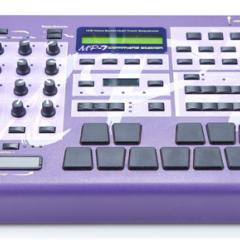
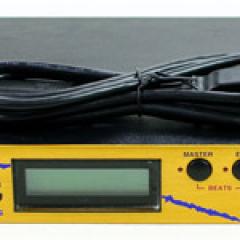
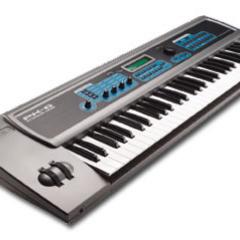
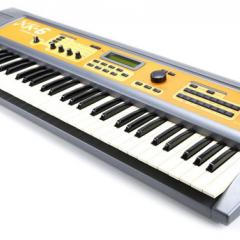
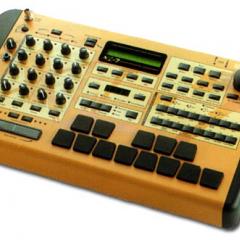
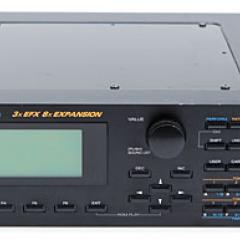
The Xtreme Lead-1 Turbo (pictured above) has 128-voice polyphony, two additional internal ROM expansion slots, four additional outputs (six total), 16 additional MIDI channels (32 total), and a digital S/PDIF output. The Xtreme Lead-1 is also available in a keyboard version called the XK-6 Xtreme Keys. A desktop MPC-sequencer style module is also available, called the XL-7 Command Station.
Current E-mu sound modules ship with one 32 MB sound-set each, but are expandable up to 128 MB via three additional slots for 32 MB expansion cards. These cards include (ranging from $249 to $395):
- 9061: Siedlaczek Orchestra 32 MB ROM.
- 9062: Pure Phatt 32 MB ROM - standard in Mo’Phatt, MP-7 and MK-6.
- 9063: Beat Garden 32 MB ROM - standard in Orbit 3.
- 9082: Protozoa 16 MB ROM - standard in Proteus 1, 2, 3.
- 9083: Definitive B-3 32 MB ROM - standard in B-3.
- 9084: Techno Synth Construction Yard 32 MB ROM - standard in Orbit 3.
- 9085: Orchestral Session Vol. 1 32 MB ROM - standard in Virtuoso 2000.
- 9086: Orchestral Session Vol. 2 32 MB ROM - standard in Virtuoso 2000.
- 9087: World Expedition 32 MB ROM - standard in Planet Earth.
- 9088: Sounds of the ZR featuring the Perfect Piano 32 MB ROM - standard in Ensoniq Halo.
- 9089: X-Lead 32 MB ROM - standard in Xtreme Lead-1, XL-7 and XK-6.
With these expansion options, you could buy a PK-6, then add the sounds of the Orbit 3, XK-6, and the MP-7... or any other combinations you may want. If you like desktop synths, you can start with an MP-7 or XL-7, and then add these same expansion card options to add Proteus, Orchestral, or the new Halo sounds to them. E-mu/Ensoniq's interchangeable sound cards and a variety of keyboard/sound-module options means that there's a model out there for everybody now.
You Might Also Like

Demos & Media
Audio Clip 1
Some funky grooves demoing some of the XL-1's sounds.
Audio Clip 2
A cool and slow funky groove showing off some of the XL-7's sounds.
ManualDownload the original owner's manual from SoundProgramming.net.
Specifications
Polyphony -
64 voices (expandable to 128 with Turbo upgrade)
Oscillators -
32MB Sound ROM
Arpeg/Seq -
Rhythmic Pattern Generator/Arpeggiator: 16 arpeggiators (1 per MIDI channel); SuperBEATS Mode
Filter -
12-Pole Digital Filters
Effects -
24-bit dual stereo-effects processor
Keyboard -
None
Memory -
512 ROM & 512 User Presets; 1 additional internal ROM expansion slot (expandable to 3 with Turbo upgrade) for Proteus libraries or create your own custom ROMs using E-mu's E4 Ultra samplers
Control -
MIDI (16-parts, expandable to 32 with Turbo Upgrade)
Date Produced -
2000
Resources
Images from Perfect Circuit Audio and E-mu Home Page
Thanks to Russ for providing information.