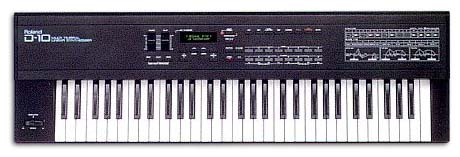
Roland D-10 / D-110

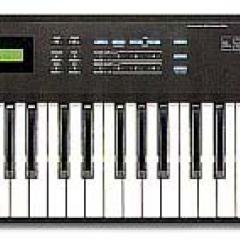
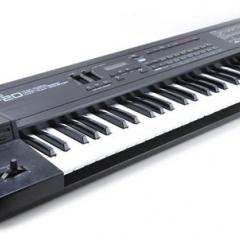
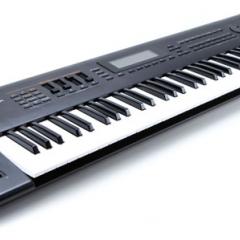
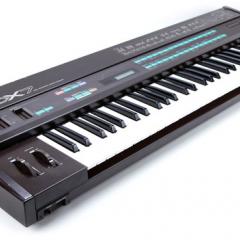
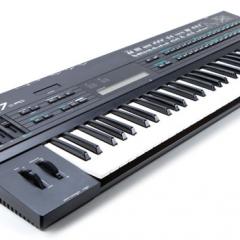
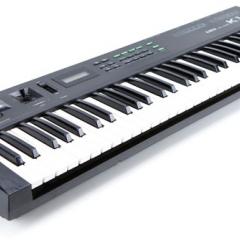
Roland D-10 Image

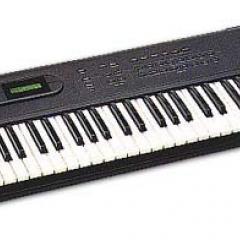
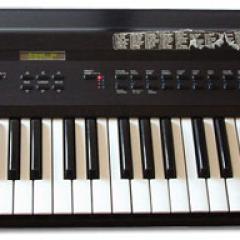
Second generation D-50 style synthesis. The D-10 is a Digital Linear Arithmetic Synthesizer and the D-110 is its upgraded rackmount version. Capable of decent acoustic sounds and great new synth-type sounds the D-10/110 is a great and cheaper alternative to the popular D-50. It has a confusing synthesis / editing method composed of tones, partials and timbres. Basically it all boils down to tricky programming which, if you know what your doing, can have interesting and unique results. On-board drum sounds, reverb effects and internal / external memory storage are also a plus.
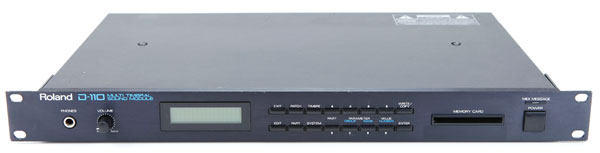
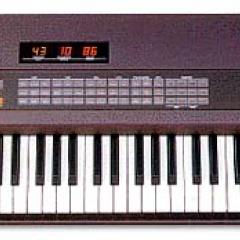
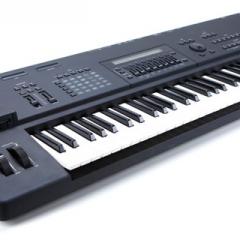
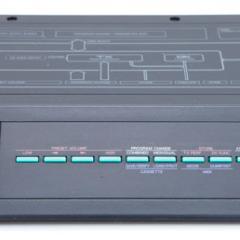
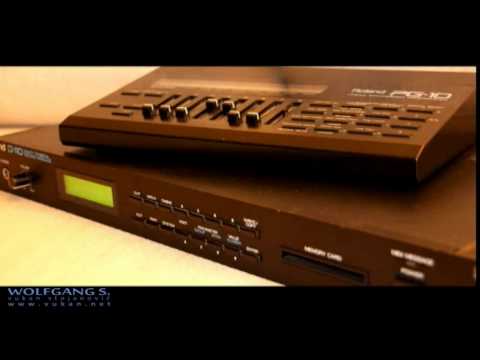
Roland D-110 Image

The D-110 rackmount version adds 6 individual outputs, and the follow-up D-20 keyboard version adds an 8-track sequencer. Definitely worth a listen for any musician on a budget! It has been used by Suzanne Vega, Future Sound of London, and Information Society.

90 Visitor comments
alen
November 12, 2012 @ 3:52 pm
While the D50 easily does "fat" due to PWM and chorus, the D10 etc models can do fat too despite lacking both. You do chorus the hard way by layering multiple partials & voices, each nearly identical with slight differences in tuning, filtering & envelopes. Give partials different but very small pitch envelopes and vibrato amounts so that no pitch shifting is audible. Use the first segment of envelopes to give each partial a slightly different start delay. In the case of pitch this also delays the start of the vibrato because they are both implemented using the same hardware (cheeky bastards).
alen
November 12, 2012 @ 3:36 pm
It's not often acknowledged that the D50/D110/D10/D20/D5 were the first digital synths to implement virtual analog synthesis. The Swedes act like they invented that. True, the resonant filters are implemented by a yet-to-be-fully-explained clever manipulation of the basic waveforms, which is why they can't be used on the PCM samples, but that doesn't somehow invalidate the design as true virtual analog. And personally I think the filters sound good. Not "syrupy" good but "interesting" good. They have character. Whil Minimoog sounds are unlikely, some JP8 and Oberheim sounds are doable.
alen
November 12, 2012 @ 3:29 pm
Interesting that these synths still get some attention 20+ years after release. They may be poor relations of the D50 that were robbed of features like chorus, PWM, multiple LFOs and even portamento, but they ARE multimbral and that is their strength. I bought a D10 in '88 because at the time it was the most acoustic sounding multi-timbral synth that I could afford. The acousticness is due to the short PCM samples used mainly for attacks, which works surprisingly well (but not, LOL, for the piano!). However, the virtual analog side of these synths is why they are still useful today.
IllogicGate
October 25, 2012 @ 5:06 pm
Tim and Casimir's Blake. The Alpha Juno is analog. The D10 is digital. Analog and Digital are *different* therefore it is silly to take issue with the fact that they don't sound like each other.

-IllogicGate
Lorentz
June 17, 2012 @ 6:31 pm
The D-110 is a really useful module, multiple outs, competent synth engine, up to 64 voices (with overflow). I used to use it as a multi-timbral module, and as I got more gear, reduced it to 1 part - but stacked the parts to create some killer bass and lead sounds, 32 oscillators in unison is hard to beat. It does reward some playing around with, it's not an instant gratification synth. Oh yeah, turn off the internal effects. Don't bother with the PCM partials, the synth partials are sweet.
 
Post Comment!
VSE Rating

It’s Good

User Rating

Rated 3.37 (680 Votes)

  • Demos & Media
  • YouTube Thumbnail
    Video 1
    - Roland D-110 demo sounds

    YouTube Thumbnail
    Video 2
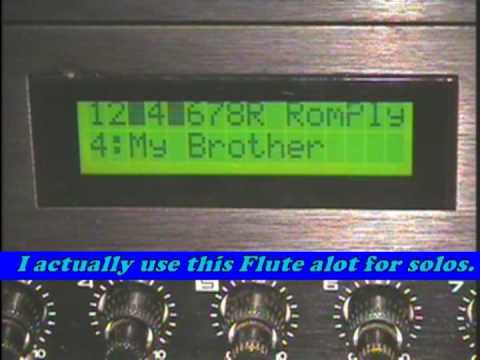
    - Roland D-110 Rom Play

    Audio Clip 1 - A few demo tunes submitted by Mick Genialis.

    Manual - Roland has made manuals for most of their products available as free PDF downloads.

    Patchs - Original factory patches for the D-110. These are Midi SysEx files and can be downloaded for Macintosh or Windows/PC.

  • Specifications
  • Polyphony - 32 voices
  • Oscillators - Digital LAS (Linear Arithmetic Synthesis) & ROM Samples
  • Effects - 8 Effects
  • Multitimbral - 9 parts
  • Drums - 1 kit, 63 sounds
  • Memory - 128 internal & 128 external patches, 64 performances
  • Keyboard - 61 note with velocity sensitivity (D-10)
  • Control - MIDI
  • Date Produced - 1988

Errors or Corrections? Send them here.