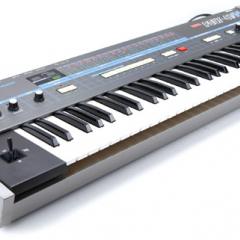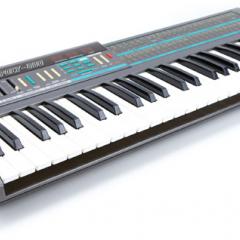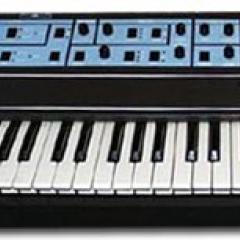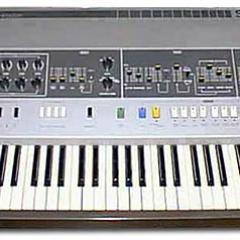
Roland Juno-6

Roland Juno-6 Image

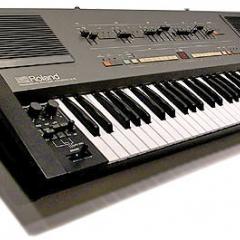
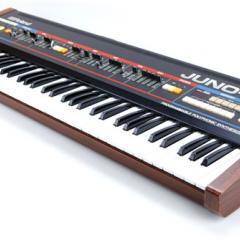
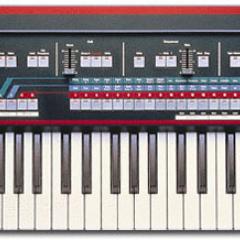
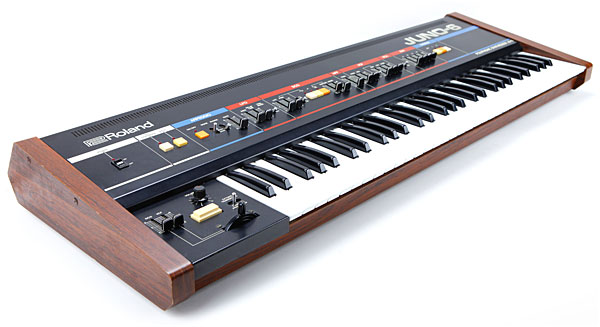
The first in a series of amazingly affordable quality synthesizers from Roland's amazing Juno family! The Juno-6 is a six voice polyphonic analog synthesizer! It's a very stable synth thanks to its digitally controlled analog oscillators. The Juno-6 sounds great, however it lacks basic necessities like MIDI control and patch memory storage.

The next generation Juno-60 version added 56 patches of memory storage. Both of these synths sound virtually the same and are considered by many to sound better (punchier) than the popular follow up, the Juno-106. The Juno-6 and 60 are very rich sounding synthesizers and are great analog machines as long as you can overlook the absence of MIDI control. Of course nobody can deny that the wooden side panel look is a true sign of Vintage status! The Junos have been used by Nick Rhodes of Duran Duran, Enya, Sean Lennon, Sneaker Pimps, Vince Clarke of Erasure and Banco De Gaia.

82 Visitor comments
Lore
December 10, 2012 @ 2:04 pm
Are These machines prone to problems? I heard one of the Juno series was /I'd plagued by the oscillators or some kind of chip breaking relatively easily. Do they need a lOt of maintenance??
Thanks
logan
November 24, 2012 @ 12:38 am
I picked up a Juno 6 from a local Goodwill at a steal. Only $50! And it's clean as a whistle, and every function works perfectly. First analog synth I've ever bought (and probably ever will buy, they're so dang expensive) and glad I was there at the right place and the right time to buy it.
Peter Kadar
November 12, 2012 @ 3:27 am
I just picked up a Juno-6 in Canada for $300. It's working and looking great.

I'm really happy I got this instrument, even though I already own a 106 and a Jupiter 6 (w/Europa upgrade). I love the simplicity, the continuously variable HPF slider, the feel of the keys, the look of it, and especially the fact that it lacks patch storage. It forces you to create in ways that you are unlikely to even if you have a 'manual' button on a keyboard.

It simply sounds gorgeous. I feel in touch with the sound in a way that I don't get from my other analog (or digital) synths. Love it!!
Haza
November 1, 2012 @ 1:49 am
I was suprised, but I ended up preferring the Juno 2 (Alpha Juno) to the 6 I owned! Yes this has that slightly older/more vintage tone and no doubt a nicer filter but it's simple to the point of being boring. The Juno 2 has such a weird/unique setup it is infinitely more interesting to program and still sounds great anyway! The price difference (mostly down to sliders and hype) is ridiculous. Juno 2 for ~£300 Juno 6 for £450 Juno 60 for £650+? J6 over-rated (not even patch storage which annoyed the F*** outta me in the end) J2 under-rated
goodevil64
October 6, 2012 @ 9:20 pm
vr, I own a Juno-6 and two Juno-60's. The only difference I know of is the HPF (High Pass Filter). On the Juno-6 it is a continuously variable fader. On the Juno-60 it is a 4 position switch. The switch is very hard to come by and usually can't be repaired. The fader is usually easier to replace or repair. Yes they sound different, because you can't get the "in between" sounds with the switch. I usually leave it at minimum unless I'm trying to make the Roland sound thinner, like a Korg *hides*. If you really don't care about the patch memory or DCB connector, save a few bucks and buy a Juno-6.
 
Post Comment!
VSE Rating

It’s Good

User Rating

Rated 4.26 (698 Votes)

  • Demos & Media
  • YouTube Thumbnail
    Video 1
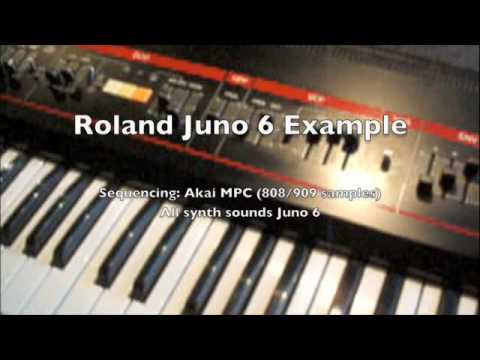
    - Roland Juno 6 Examples

    Audio Clip 1 - A short track made completely with sounds from the Juno-6 (drums included), submitted by Matt Langston.

    Manual - Roland has made manuals for most of their products available as free PDF downloads.

  • Specifications
  • Polyphony - 6 voices
  • Oscillators - DCO: pulse, saw, and square
  • LFO - rate and delay
  • Filter - non-resonant high pass and resonant low pass
  • VCA - level, ADSR and gate
  • Keyboard - 61 note keyboard (no velocity or aftertouch)
  • Arpeg/Seq - External JSQ-60 Sequencer
  • Effects - Chorus (2 types)
  • Memory - None
  • Control - Filter Control In, Ext Clock In
  • Date Produced - 1982

Errors or Corrections? Send them here.