Yamaha DX7IID / DX7IIFD
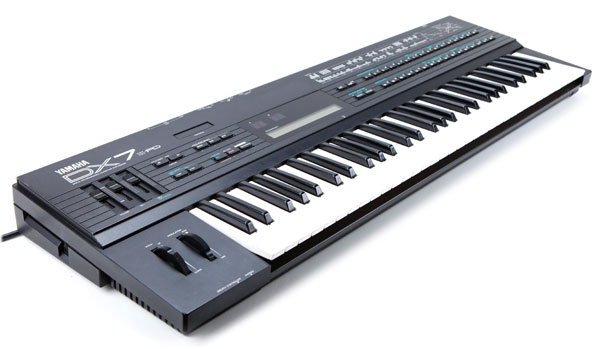
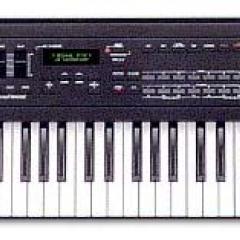
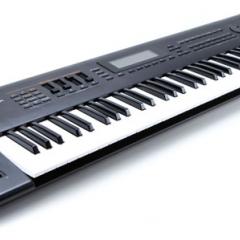
The DX7, a classic FM synth, gets a make-over with three significant updates. The updated models feature a more sturdy chassis with actual push-buttons replacing the cheaper and less reliable membrane buttons of the original DX7. The two real time sliders (that allow for control of user-programmable parameters in real time) are larger than before. Internally, the biggest improvement is the updated 16-bit digital circuitry for cleaner and much less noisy sound quality. Patch memory has also been doubled from 32 to 64 voices. Additional general improvements include enhanced MIDI support, micro-tuning capabilities, aftertouch controlled pitch bending, and multiple LFOs.
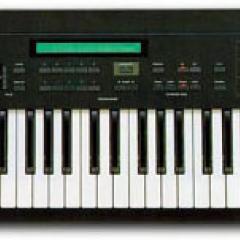
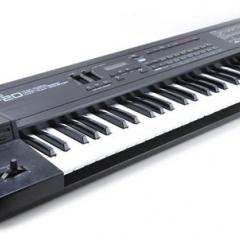
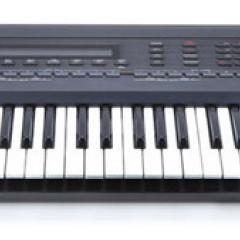
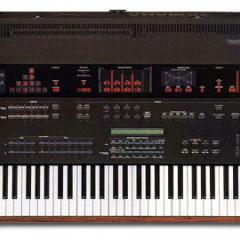
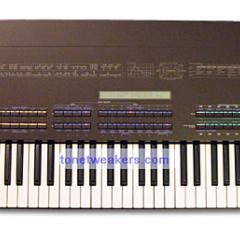
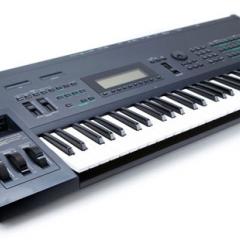
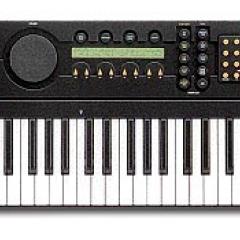
The DX7IID and DX7IIFD (pictured) models also added bi-timbrality with keyboard split and layering capabilities. This allows two voices to be layered in dual mode, providing very rich combinations of sounds that would otherwise be impossible with the original DX7. Voices could also be split across the keyboard, for a two part multi-timbral performance capability; again, impossible with the original DX7 (or the DX7S, as the S stands for single timbre).
The DX7IIFD added a Floppy Drive (that's what the FD stands for) offering one megabyte of memory space (equal to 40 RAM cartridges) for thousands of voices, fractional scaling, SysEx data and more.
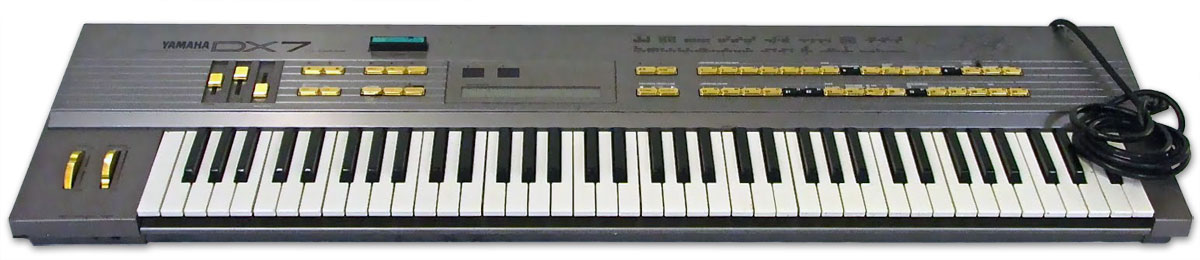
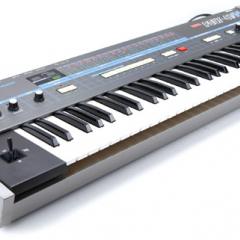
Pictured above in silver and gold is the DX7 Centennial, released in 1987 to celebrate Yamaha's 100th anniversary. Not just a new paint job, this limited edition model has 64-voice internal RAM memory and 64-performance memory, 32-note polyphonic stereo output (2 x 16 voices), and a 76-key velocity and after-touch sensitive keyboard that glows in the dark. Only about 300 were made and it originally retailed for $3,500!
Like the DX7, these updated models may have been used by The Crystal Method, Kraftwerk, Underworld, Orbital, Talking Heads, Brian Eno, Depeche Mode, D:Ream, Front 242, U2, A-Ha, Enya, The Cure, Stabbing Westward.
You Might Also Like
Demos & Media
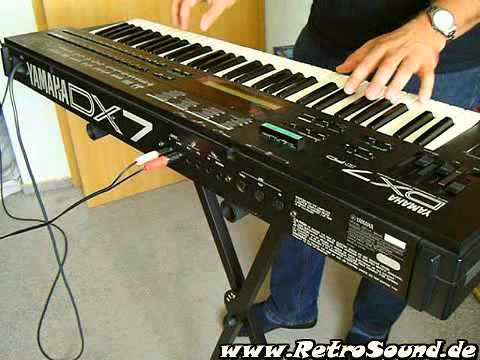
YAMAHA DX7 II FM Synthesizer “Ambient DX”
Yamaha DX7 | demo
Audio Clip 1
Get a taste of the sounds a DX7 can generate.
ManualDownload the original owner's manual here.
Specifications
Polyphony -
16 voices (8 voices in Dual mode)
Oscillators -
FM Tone Generator (6 operators and 32 algorhythms)
LFO -
Sine/Square/Tri/SAW up/SAW Down/Random
Filter -
None
VCA -
6 Envelope generators 8 parameters each
Keyboard -
61 keys, Velocity and Aftertouch
Memory -
Internal: 64 voices/32 performances, external: 128 voices/64 performances
Control -
MIDI IN/OUT/THRU
Weight -
23 lbs. (10.5 kg)
Date Produced -
1986 - 1989
Websites of Interest
Resources
Images from Perfect Circuit Audio and MatrixSynth.
Thanks to Joel Lingenfelter and Scott Marcotte for providing some of this information.