Yamaha SY77
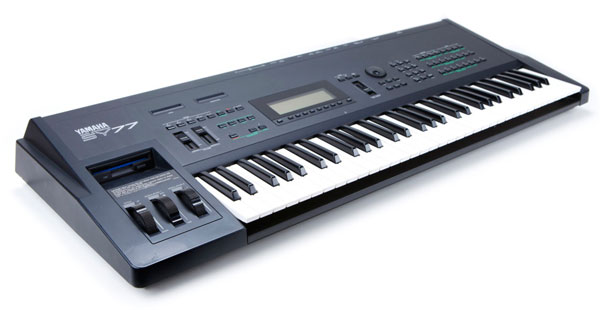
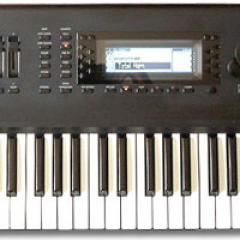
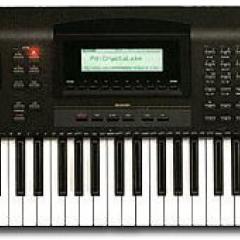
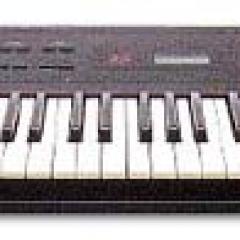
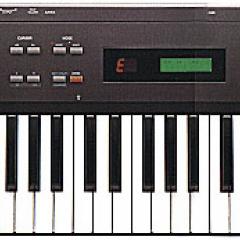
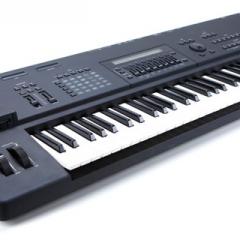
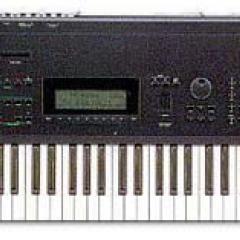
The SY77 is like having a super-sized sample-memory workstation with the added synthesis and sounds of a DX7mkII. For its synthesizer section it employs a 6 operator AFM synth engine similar to, if not better than, the original DX's. The AFM section offers 45 algorithms, 3 feedback loops and 16 waveforms for creating some of those unique FM sounds. Sampled sounds (AWM2) which are in memory (or on external ROM cards) can then be mixed with the AFM sounds to create entirely wild new sounds! And these sounds are quite shapeable thanks to the resonant multi stage Time Variant Filters which offer the chance to recreate the warm analog sounds of classic synths, or create something entirely new.
There's an on-board sequencer section for creating your songs right on the SY77. It's got 16 tracks, channel 16 belongs to the SY77's built-in drum synthesizer which holds up to 61 sounds. The sequencer can hold up to 16,000 notes, 99 patterns and 1 song. And since the SY77 features 16 voices of polyphony for the AFM section, and another 16 voices for the sampled sounds, there are (32) plenty of voices to go around to build your song. Add the fact that there are 4 independent digital multi-effects which include reverb, delay, chorus, panning and more and you have yourself a classic music production workhorse.
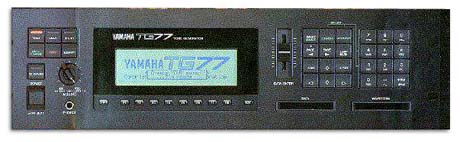
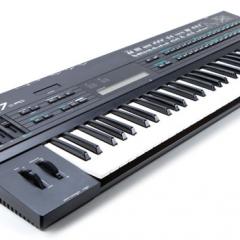
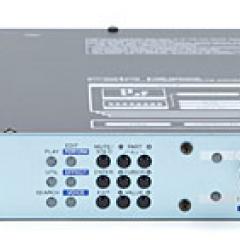
The SY77 was also marketed in a rack-mount module called the TG77. All the same features as the SY77, except the keyboard, sequencer and 3.5" disk drive are gone. Following the SY77 came the upgraded SY99. Its main features and guts were the same however it had increased memory, waveforms and a bigger keyboard. The SY77 (or TG77) is great for really controlling and creating sounds for use in various electronic forms of music and has been used by 808 State, Skinny Puppy, Brian Eno, Europe, Toto, Vangelis, Chick Corea, and Front 242.
You Might Also Like
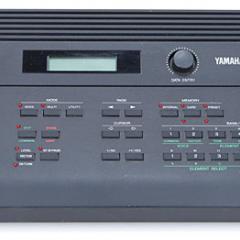

Demos & Media
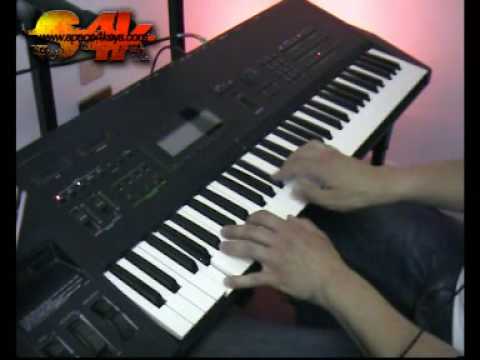
Yamaha Sy77 Synth Demostration by S4K ( Dream Theater, Corea)
ManualDownload the original owner's manual here.
Specifications
Polyphony -
32 voices: 16 AFM voices, 16 AWM2 sampler voices
Oscillators -
6 operator AFM synth with 45 algorithms, 3 feedback loops and 16 waveforms; 16-bit AWM2 sample ROM waveforms
Filter -
Multi-stage Time Variant Filters with resonance
Arpeg/Seq -
16 track sequencer, 16,000 note capacity, 99 patterns, 1 song, 61 built-in drum sounds
Effects -
4 independent digital effects processors
Keyboard -
61 keys with velocity and aftertouch
Memory -
128 preset & 64 user patches, 16 preset & 16 user multi-patches
Control -
MIDI
Date Produced -
SY77: 1989, TG77: 1990
Websites of Interest
Resources
Images from Perfect Circuit Audio and Synthesizer Picture Archive.