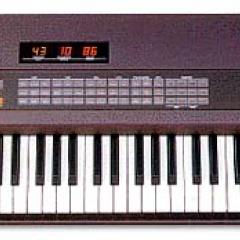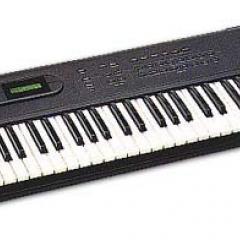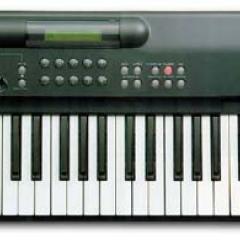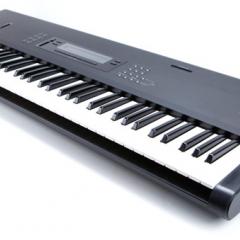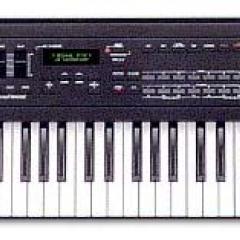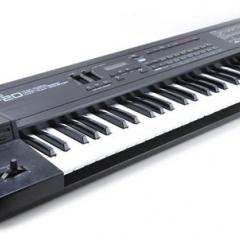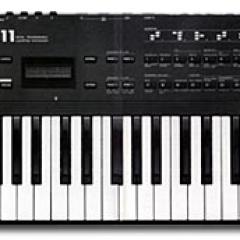
Kawai K1ii

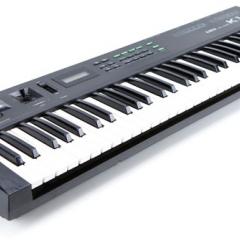
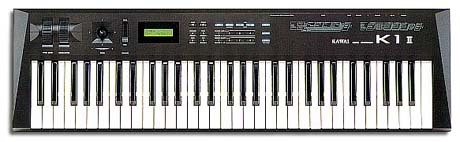
The K1ii was the first major update to Kawai's popular K1 digital PCM-waveform synthesizers. The K1ii has the same synthesis architecture as the original K1. There are 256 digital samples of waveforms, 50 of which are from acoustic instruments. You combine up to four wave shapes to create very new and unique sounds. They are capable of very good acoustic recreation, excellent unique synth sounds, or at times completely noisy walls of complex sound.

The new and improved K1ii added on-board reverb effects and better drum sounds to the original K1. The multitimbrality is up to 8 parts, which is great for sequencing in the studio since you can have (up to 8) multiple patches playing simultaneously. The K1ii is also available in a rackmount module, known as the K1iir. The rack version is identical to the keyboard version except for the effects. The K1iir has no effects processor built-in as does the keyboard version.
11 VISITOR COMMENTS
- Demos & Media
-

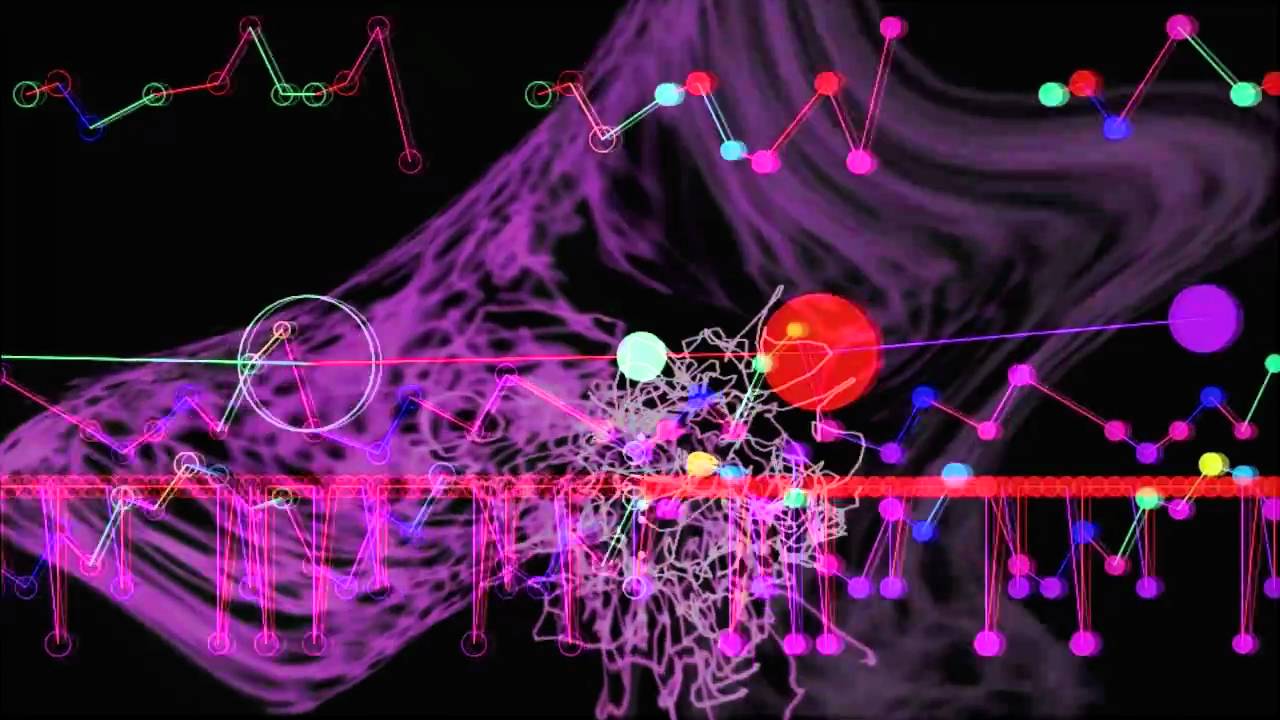
Video 1 - Kawai K1II symphony + musanim midi animationPatch Files - Every patch Kawai has produced for the K1ii is available here, courtesy of Harvey Landress. They are for Macintosh and Windows/PC.
Manual - Download the original owner's manual from SoundProgramming.net.
- Specifications
- Polyphony - 16 voices
- Oscillators - 256 PCM waveforms (4 per sound)
- LFO - Standard LFO
- Filter - No filter
- VCA - Standard ADSR
- Keyboard - 61 keys (velocity & aftertouch)
- Memory - 64 single-patches or 32 combo-patches
- Control - MIDI
- Date Produced - 1989
- Est. Value - $350
- Websites of Interest
- Resources & Credits
-
Images from Joseph Baksay, found at Synth Site.
Errors or Corrections? Send them here.
Well, I found a simply stunning video at this link: https://www.youtube.com/watch?v=wdx8aFv6Vyk. The musician used an MS-DOS sequencer and all sounds came from the K1 II. All the reverb and new percussion you could want. Really marvelous. Come on, SysOp. Swap out that tired old video link for this one. There's a good chap.
The manual refers to the parameters which are editable by the user on each patch, this doesnt mean the equipment's software / operative system does not implement that parameter from another one. That is actually something very common regarding this particular parameter, in which the paramater's value is copied from the velocity touch value, so the way the sound acts when we release the keys is influenced by the way we touched the keys in the first place.
And a synth doesnt really need to be expensive in order to implement that.
The complexity arrives when the value of a key's "release velocity" influences further keys parameters, as in Oberheim Matrix, for example.
Anyway, this is not really of much importance in my opinion :)
Cheers
Especially in synths at this price tag.
Only few of the best keys support release velocity, there is no even point to think that this could have it.
Aftertouch is allready big plus as not all boards have even that.
And then there is forever going topic about initial action and keyboard feel.
That's matter of taste and there is no single keyboard in this world thats action everybody would like... .. .