Korg R3
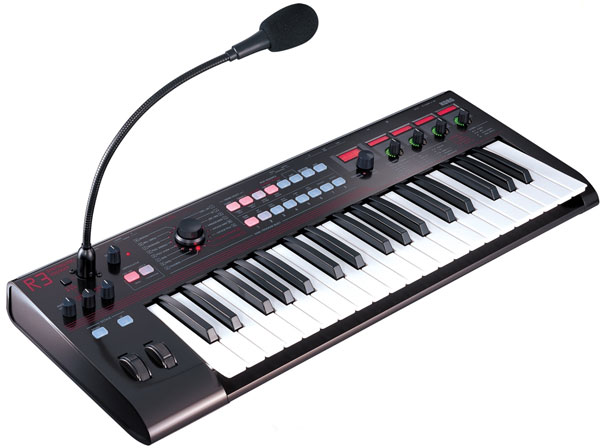
Occupying the middle ground in Korg's MMT lineup between the flagship Radias and the ultra-portable microKorg XL, the R3 delivers sophisticated virtual analog power in a compact yet sturdy package. Its 37 full-sized, velocity-sensitive keys and four assignable knobs make it a lightweight yet flexible performance instrument for shaping classic modeled sounds with a synthesis engine in the spirit of the MS2000.
The R3 is marketed as a "Synthesizer/Vocoder", and the included gooseneck mic lets you take full advantage of its 16-band vocoding capabilities right out of the box. Simply enter Vocoder mode for access to all of the vocoder's variables that work with an internal or external carrier signal. It also lets you record up to sixteen 7.5-second Formant Motion sequences, allowing you to play saved phrases—albeit at a fixed tempo—through the vocoder without external input. Whether you're looking to channel the spirits of sci-fi robots, make a guitar do backing vocals or are in need of some unconventional choral accompaniment, the R3's pro-grade vocoder earns its place in both the mix and the title.
Each of the 128 editable patches can contain up to two timbres, sharing the somewhat meager polyphony between them. These can be layered or divided across the keyboard and can be assigned to individual MIDI channels. Each of these two timbres contain all the capabilities listed, so despite being well suited for mono and lead styles it's possible to get surprisingly complex, evolving pads which belie its 8-note polyphony. This is best displayed when using each timbre's modulation sequence, which lets you record a variable's knob changes and can yield complex changes in a single key press. There's also a 6-mode arpeggiator with a toggle button and latch control to further animate the sound.
Every timbre consists of two LFOs, two oscillators, a wave-shaper with sub-oscillator options, two insert effects, and three envelope generators for filter, amp, and one for assignment using the Virtual Patch system. This feature lets you define up to six additional routings, giving the unit a fitting touch of modular dynamics which can add subtle dynamics or make sounds spiral off into mayhem. Unfortunately the routings are limited, but most of the logical sources and destinations are included. The two oscillators cover a wide range of traditional analog waveforms with some useful extras (osc1 includes 64 DWGS preset waveforms and the vowel-like Formant wave) and allow a number of interactions between them: ring mod, VPM and unison, among others. External signals can also be processed through the filters, gates and effects. All of this is wrapped up with one master effect and a variable 2-band EQ with some other fine-tuning mods to polish the finished sound.
All of this programming demands an intuitive interface, and although it involves some menu-diving, this is handled by selecting the category with a rotary encoder and then editing individual variables with the 4 main pots. Though it isn't "per-knob" editing, each pot is encircled by a slick-looking LED halo which shows the value regardless of the knob's current position. Each knob also has its own small LCD screen which can show the variable or its value by hitting the shift key. This combination along with the Original Value light takes much of the drudgery and guesswork out of building your own patches, but it's recommended to load up the included software editor since some sub-variable and effects tweaks can seem cryptic at first.
Overall, the R3 is a fun, good quality, affordable synth for anyone who enjoys sculpting sounds using traditional subtractive synthesis, and offers enough complex features and character to earn its place in the mix. Great to program and built with portability in mind, the R3 has what it takes to rock the stage!
You Might Also Like

Demos & Media
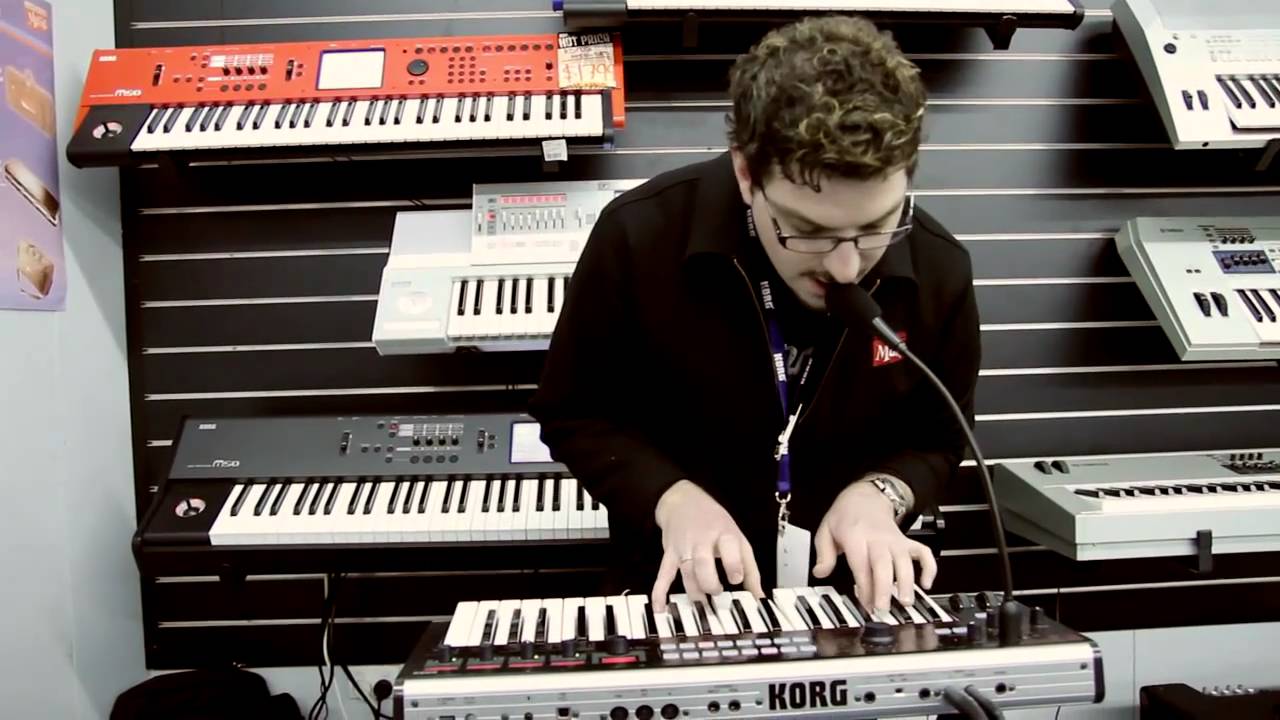
Korg R3 Synthesizer Vocoder Demo
Specifications
Polyphony -
8 Voices
Multitimbral -
2 Timbres
Oscillators -
2 OSCs per Timbre (with Waveform mod, Cross-mod, Unison, VPM), Noise Generator
Waveforms -
Saw, Pulse, Triangle, Sine, Formant, Noise, DWGS, Audio In
LFO -
2 LFOs per Timbre - LFO 1: Saw, Square, Tri, S&H, Random. LFO 2: Saw, Square+, Sine, S&H, Random
Filter -
Wave-shaping, 2 Chain-able Filters per Timbre - Filter 1: 12/24dB-LPF, HPF, BPF Filter 2: LPF, HPF, BPF, COMB
Envelope -
3 ADSR envelopes per Timbre - Pitch/Filter/assignable
Effects -
Compressor, Limiter, Gate, Filter, Wah, EQ, Decimator, Talk Mod, Delays, Reverb, Chorus, Flanger, Pitch Shift, Cab Model
Vocoder -
16-Band
Sequencer -
1 Motion Sequence per Timbre: Formant Motion (7.5 seconds x 16)
Arpeggiator -
8-Step Arpeggiator - Up, Down, Alt1, Alt2, Random, Trigger
Keyboard -
37 keys (Velocity sensitive)
Memory -
128 User Patterns
Control -
MIDI In/Out/Thru, Pedal and Switch Inputs
Date Produced -
2006 - present