PAiA Proteus 1
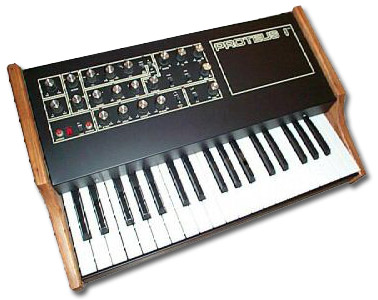
This ultra-rare analog monosynth is called the Proteus 1, but should not be confused with E-mu's Proteus/1. This is a monophonic analog synth with 16 memory locations! It's based on CEM chips (as used in the Sequential Circuits Pro-One and many other classic vintage synths). Its got two oscillators with oscillator sync, an envelope generator, LFO, lowpass resonant filter, glide and noise-gen. This synth is unique for a vintage monosynth in that it has patch memory which can be programmed by the user and also has a series of lights to show when knob settings match internal patch settings.
There's also a patchbay on the back of the synth with control voltage inputs for MANY of the synth's parameters using external voltages, just like you can do on modular synths like the ARP 2600. This really increases your options. There are jacks for: VCO1 pitch, transpose, out. VCO 2: FM, transp, out, pulse width control, hard sync and soft sync ins. VCF: cutoff freq, resonance, out, fx send and receive. Preset: advance. Keyboard CV and gate. MOD: LFO and ADSR. Hi and low outs. You can use another modular synth, CV / analog sequencer or a MIDI to CV convertor to control any of the CV inputs. Ultra rare! Only 70-80 of these synths were produced. Like most PAiA gear, it was a D.I.Y kit that originally retailed between $400 to $500 in the late seventies.
You Might Also Like
Demos & Media
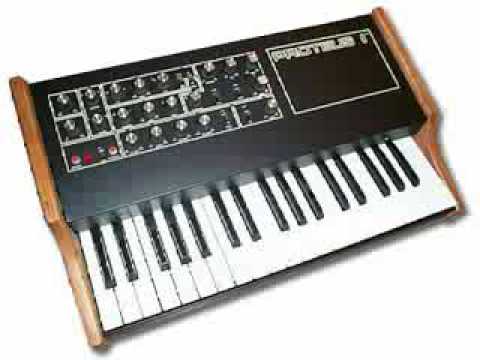
PAiA Electronics Proteus I Mono Synth Audio Demo (Side 1 Intro)
Specifications
Polyphony -
Monophonic
Oscillators -
2 VCOs + Noise-Gen.
LFO -
1 LFO
Filter -
1 Lowpass, resonant filter
Envelopes -
1 envelope generator
Memory -
16 memory locations
Keyboard -
37 keys
Control -
CV-Gate
Date Produced -
1978/79 - 1982
Resources
Info by Jacob Keller.
Reviewed November 2007.