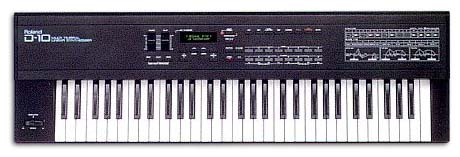
Roland D-10 / D-110

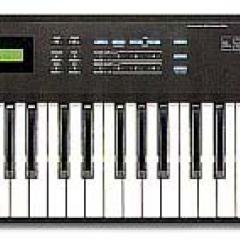
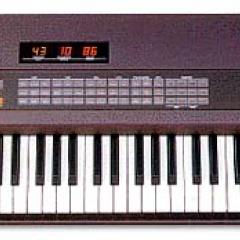
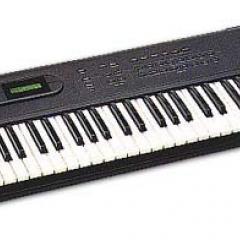
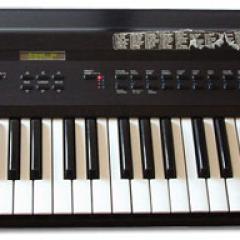
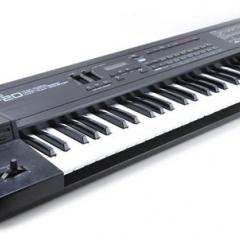
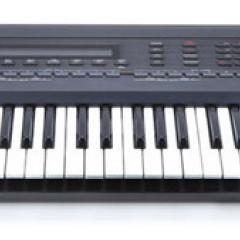
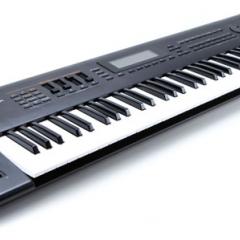
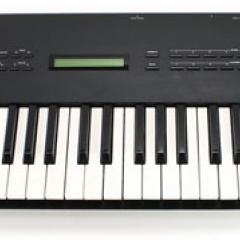
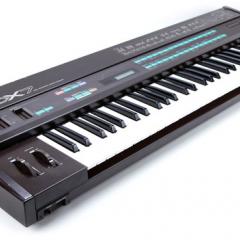
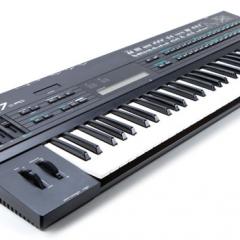
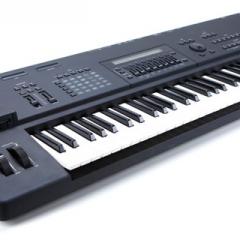
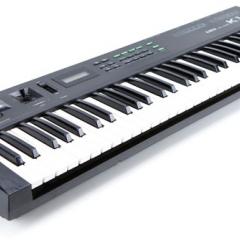
Roland D-10 Image

Second generation D-50 style synthesis. The D-10 is a Digital Linear Arithmetic Synthesizer and the D-110 is its upgraded rackmount version. Capable of decent acoustic sounds and great new synth-type sounds the D-10/110 is a great and cheaper alternative to the popular D-50. It has a confusing synthesis / editing method composed of tones, partials and timbres. Basically it all boils down to tricky programming which, if you know what your doing, can have interesting and unique results. On-board drum sounds, reverb effects and internal / external memory storage are also a plus.
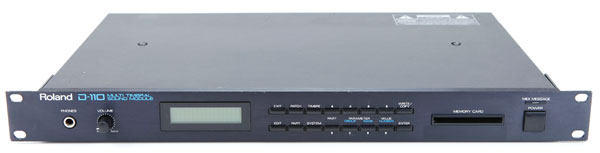
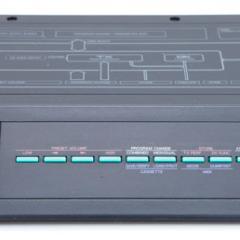
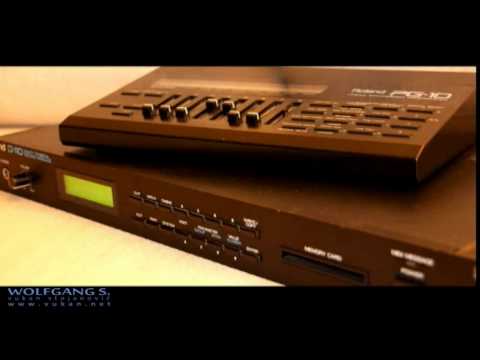
Roland D-110 Image

The D-110 rackmount version adds 6 individual outputs, and the follow-up D-20 keyboard version adds an 8-track sequencer. Definitely worth a listen for any musician on a budget! It has been used by Suzanne Vega, Future Sound of London, and Information Society.

90 Visitor comments
another matt
January 24, 2012 @ 10:37 am
I agree with Tim below - what a massively underrated synth! I got mine just last week and I love this thing! Yeah, many of the attack samples are lousy but the synth engine is really cool when you figure out how to tame it, and the onboard drums and reverb are quite good. The square waves are great when you mess around with the pulse width - many Commodore 64/NES sounds can be had in that manner. Also, it's apparently MT-32 compatible, which means you can hook it up to an old PC and get better music out of your late 80's games. :)

They're only like $40-60 on eBay, go get one!
Aaron
January 9, 2012 @ 7:35 pm
Also: It has a programmer. It's called the PG-10. Totally worth it!
Aaron
January 9, 2012 @ 7:35 pm
This article fails to describe what's going on with this machine.

Think of it this way: Each voice has four 'sub voices'. Each one is a single-oscillator subtractive synth, square/sawtooth waveform, resonant filter, three (!) envelopes. LFO but it's modulation isn't great. Each sub voice can do away with the filter and turn into a wave table voice. Sub voices go into pairs which can be mono, stereo, ringmodulated, etc.

It's cold and digital, yes, but sometimes that's what you want. Also, it's more 'creamy' unlike the DX-7 and friends, which have a metallic sound. Truly unique.
timohohoh
January 6, 2012 @ 6:28 am
hey folks!

does anyone know how to set this one to a masterkeyboard?

thanks!

t.
andoni
December 21, 2011 @ 7:23 am
I wouldn't pay more than £50 for one. And that's if you really really want it.The interface is a nightmare to work with. And if you want that 80's ditial synth sound prehaps better with the d-10 keyboard, or one of the yamaha dx synths, which i've found more easier to program than this. It has muilty out puts though, which is good for drums, if you like doing your mixing via a big mixing board. But don't expect a fun exciting snyth. Better trying for a emu, or newer roland jv 1080 if you want a flexible module. Also make sure the machine's setting are not messed up, it has no factory restore
 
Post Comment!
VSE Rating

It’s Good

User Rating

Rated 3.37 (680 Votes)

  • Demos & Media
  • YouTube Thumbnail
    Video 1
    - Roland D-110 demo sounds

    YouTube Thumbnail
    Video 2
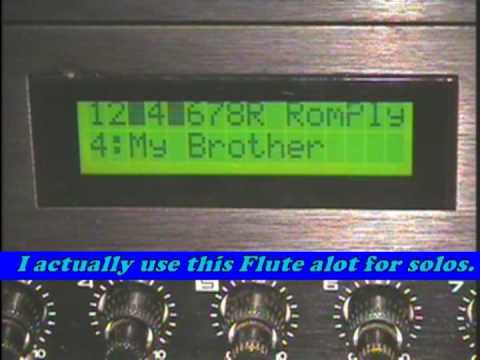
    - Roland D-110 Rom Play

    Audio Clip 1 - A few demo tunes submitted by Mick Genialis.

    Manual - Roland has made manuals for most of their products available as free PDF downloads.

    Patchs - Original factory patches for the D-110. These are Midi SysEx files and can be downloaded for Macintosh or Windows/PC.

  • Specifications
  • Polyphony - 32 voices
  • Oscillators - Digital LAS (Linear Arithmetic Synthesis) & ROM Samples
  • Effects - 8 Effects
  • Multitimbral - 9 parts
  • Drums - 1 kit, 63 sounds
  • Memory - 128 internal & 128 external patches, 64 performances
  • Keyboard - 61 note with velocity sensitivity (D-10)
  • Control - MIDI
  • Date Produced - 1988

Errors or Corrections? Send them here.