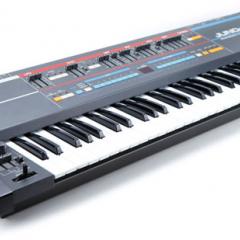
Roland • JUNO-60

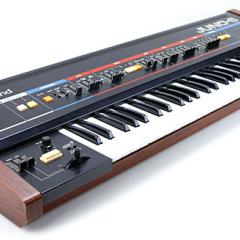
JUNO-60 Image

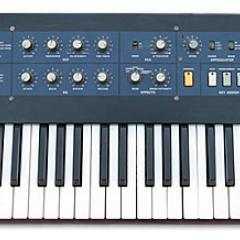
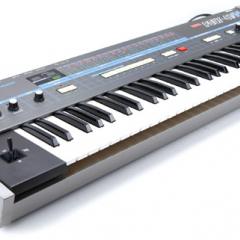
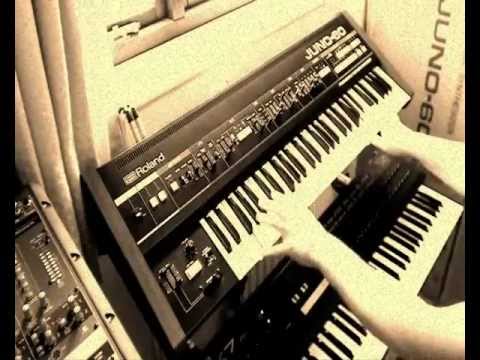
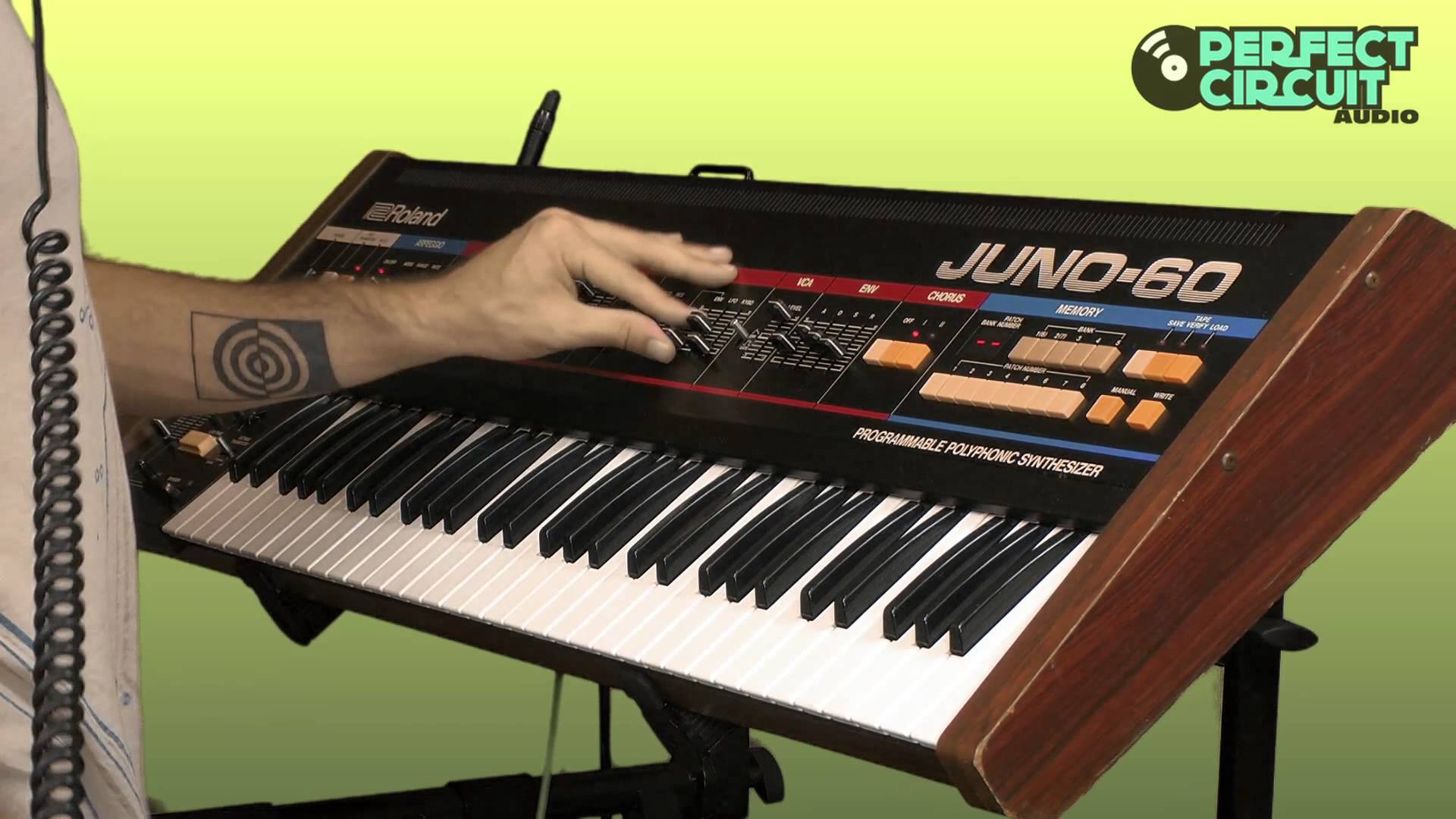
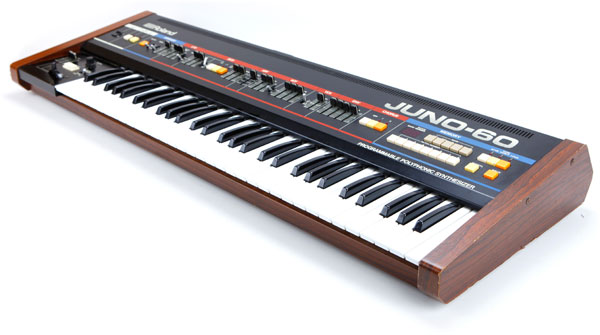
Among the first in Roland's amazing JUNO family! Six analog voices of polyphony and patch memory storage!! The JUNO-60 sounds great, however, like the JUNO-6 it lacks MIDI control. The JUNO-60 includes 56 patches of memory storage. The JUNO-60 is still popular due in part to opinions that it sounds better (punchier) than the JUNO-106. The JUNO-6 and 60 are very rich sounding synthesizers and are great analog machines as long as you can withstand the absence of MIDI control. The JSQ-60 sequencer is an external sequencer controller for the JUNO-60 and is usually worth acquiring. Of course nobody can deny that the wooden side panel look is a true sign of Vintage status! JUNOs have been used by Enya, The Cure, Sean Lennon, Faithless, Astral Projection, Vince Clarke, Rabbit in the Moon, Men at Work, Flock of Seagulls, Olive, Dee-Lite, Howard Jones, Locust, Eurythmics and Add N to (X).

Cool Tips:
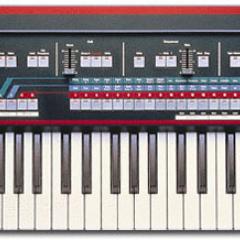
The JUNO-60 can have 76 patches. By pressing down nr 5 and 1 or 2, at the same time, you get access to patch 57 to 76.

To access patches 80 to 98, (dead-patch) plug a cord into the PATCH SHIFT connector. Now you can access the test-programs 80-98: Keep 5 down and press 3 for bank 8, 5 and press 4 for bank 9.

Fire the JUNO up with the KEYTRANSPOSE button pressed and the arpeggio mode-switch up to enter MONO-MODE. All 6 voices will be assigned to the last key pressed.


VISITOR COMMENTS (48)

Comments page 10 of 10
Click here to add a comment
Analog Judy
Posted 4 days ago
Yet another commentator with only a vague clue what they're talking about when it comes to DCOs. The chip you refer to is a digital counter that produces pulses at a rate divided from a master clock. It does not produce any sound you hear, only the timing for it. The audio is produced by a charged capacitor as in a traditional VCO. The Juno 106 and 60 are sawtooth core oscs, but instead of the cap being told to discharge by a voltage comparator, it is instead signaled by the pulses produced by the aforementioned (very stable) counter. The cap itself is charged by a voltage produced by the CPU through a D/A convertor. THIS IS BEFORE THE AUDIO SIGNAL PATH. The ANALOG output of the DCO is a saw wave (same as VCOs) which is then shaped to produce the other waveforms (same as VCOs). You're right about the timing, but that's about all you're right about. There is a charge capacitor, and the audio path is entirely analog. Half an education is worse than no education at all, IMAO. Cheers;)
Eric Crapton
Posted 22 days ago
Firstly I'm a guitarist and not a very good one and although I took piano lessons at school, that seems a universe away. I managed to get my hands on an as new Midi converted Juno60 a month ago. I bought it locally for £300 from a bloke who doesn’t have a computer and probably never even heard of Ebay!!! (Ebay purchasers eat your heart out!)

She (because she is sexy beyond belief) blows my mind every time I power her up, which is only once a day as she is working overtime helping me keep my creative juices flowing all day every day, well for sixteen hours at least.

This is only the second time I’ve been in love and the first time ‘till death us do part’ actually means just that! Need I say more?
Myself
Posted 33 days ago
Sorry old synth guy, but a DCO (at least in a Juno) is NOT a digitally controlled VCO. It is a digital counter. There's no analog core, no integrator, nothing that CAN go out of tune.
It can't drift because there's nothing TO drift.
It's a digital chip- a 82C53 chip. A counter. It takes in a digital word and starts counting at the clock rate of the CPU.
No variable voltages (analog) in it whatsoever, just digital words. The outputs are square waves that are then shaped and treated as analog waveforms.
VCOs are analog no matter how they're controlled.
Fact is, these DCOs are LOCKED to the main crystal clock and can't go out of tune even if you took a heat gun to one.
A VCO must have a charge capacitor to be a VCO.
That's how all VCOs work, whether linear or exponential.
Look at any manufacturer spec sheets for this part. You'll see them listed as digital parts because they ARE digital parts.
ricky prime
Posted 41 days ago
I own a juno 60 and a juno 106 i love them both !! I would have to say ones not better than the other but both have unique personalities , and i would say they are only limited to your own creativity !!!
Cureco
Posted 42 days ago
I own one Juno 6 in perfect condition and one Juno 60 parts, Can i convert my Juno 6 into Juno 60 just changing CPU board for presets and memory and Panel B Borad?
 

infoRatings


Demos & Media


Specifications


Resources