Roland Juno-D
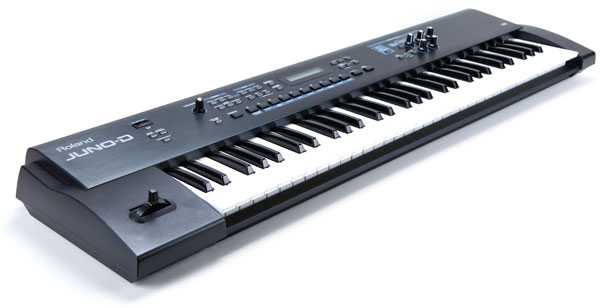
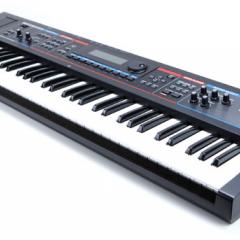
Roland has brought the Juno back, but this is not an analog synth--it is a budget digital wavetable synthesizer. It may not look anything like its predecessors, nor does it sound like the classic analog poly-synth whose name it bears, but like those before it, the Juno-D offers a fairly robust package of synth sounds and potential in a streamlined, user-friendly interface at a reasonable price---making it a good entry-level keyboard.
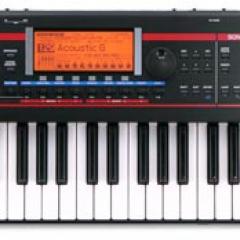
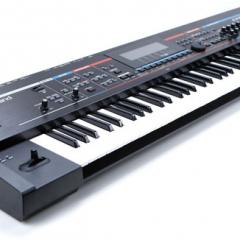
The Juno-D comes with 32 MB of waveforms in its memory including Roland's stereo multi-sampled piano, and a whole range of synth sounds from vintage synths to GM2-compatible. Patches are organized in categories such as Piano, Guitar, Orchestra, etc. There are digital resonant filters, LFOs, multi-effects, phrase sampling, chord memory, five front-panel control knobs and a D-Beam controller so you can twist any of the hundreds of patches it ships with into your own more unique sounds. Those who want to program their own Juno-D sounds via computer, a Mac/PC editor is included.
A Limited Edition model was released which doubled waveform memory to 64MB and added extra patch memory storage (706 total patches, 66 are new) and featured some newly programmed sounds including an incredibly realistic piano based on 88-key stereo multi-sampled waves, a massive rock organ, '80s-era brass and electric piano, vintage synth sounds and many others.
As entry-level keyboards go, you can't go wrong with the Juno-D. It has hundred of quality Roland sounds at your disposal, and tweaking them is fairly easy. However, this is not a workstation (like the Juno-G) nor is it a retro re-make of the classic Juno series synthesizers. It offers Juno-like simplicity, yes, but more discerning synthesists and keyboard players may want to look elsewhere for better sounds or a more advanced keyboard than the Juno-D. In other words, the original Juno-series has nothing to worry about from this new Juno.
You Might Also Like


Demos & Media
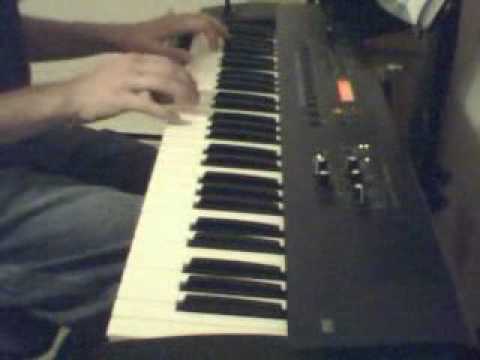
Roland Juno-D Demo Patches
ManualRoland has made manuals for most of their products available as free PDF downloads.
Specifications
Polyphony -
64 voices (16-part multitimbral)
Oscillators -
32 MB (64 MB Limited Edition Model) Waveform Memory, 686 Original Tones
Sequencer -
Rhythm Guide: 32 Preset Patterns
Arpeggiator -
Phrase/Arpeggio Templates: 342; User Templates: 8; Styles (Variations): 473
Multi-Chord Memory: 16 Presets, 8 user
Multi-Chord Memory: 16 Presets, 8 user
Effects -
Multi-Effects: 47 types; Reverb: 8 types; Chorus: 8 types
Memory -
640 Patches (706 Limited Edition Model), 20 drum kits, 32 Performances, 128 User Patches
Keyboard -
61 keys (with velocity)
Control -
MIDI IN/OUT
Date Produced -
2005
Resources
Images from Perfect Circuit Audio.
Reviewed August 2008.