Roland Juno-Stage
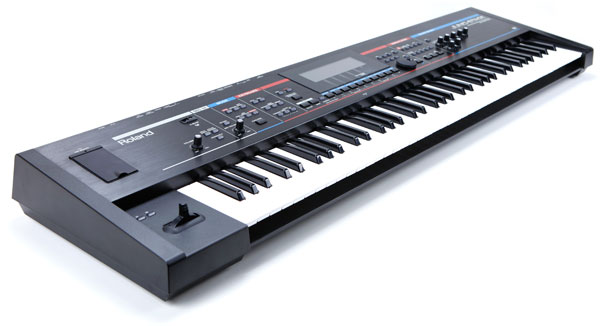
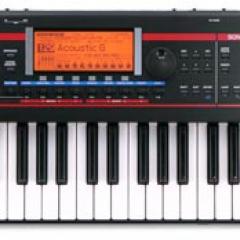
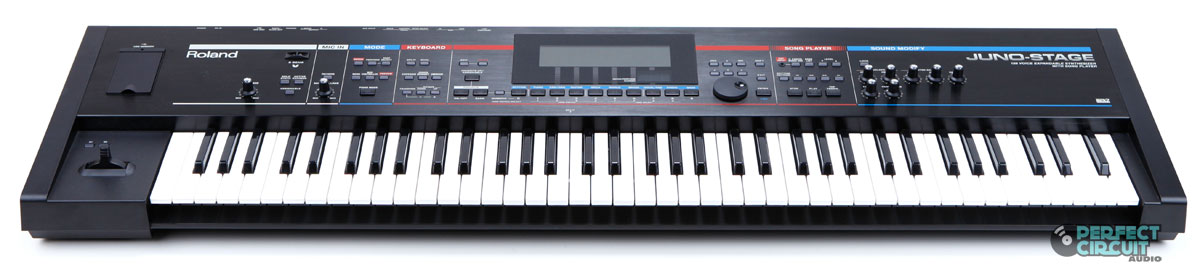
Roland's Juno-Stage puts the digital sound engine of the Juno-G synthesizer into a larger professional keyboard designed for the stage. It features a semi-weighted 76-note keyboard with velocity (no aftertouch), a large easy to read back-lit LCD display, dedicated performance knobs, D-Beam controller, hands-free patch select, instant master MIDI control functionality and much more. The Juno-Stage does not, however, have the sequencing/workstation capability of the Juno-G.
The sounds of the Juno series are high quality digital wave-based sounds of which the STAGE has a large 128 MB wave memory (double that of the Juno-G). The sounds are not incredibly special, but they do cover a versatile range of synth & keyboard sounds including an 88-key stereo multi-sampled piano (taken from the Fantom-X), plus 2 open SRX expansion slots for sound set customization. Sounds can be quickly accessed via Favorite buttons and the so-called 'hands-free' patch select which is accomplished by using a foot switch connected to a dedicated Patch Select jack, so you never have to take your hands off the keyboard.
Roland optimized Juno-Stage's controllers for live performance, featuring easy-to-grab knobs for instant Master EQ and Reverb control. Located above the pitch bender, two assignable switches can be used for rotary organ effects, portamento on/off, and more. Juno-Stage is also equipped with a USB port and Song Player function that enables direct playback and control of backing tracks from a USB key. You can play MP3, .WAV, AIFF and SMF files, and even use the Center Cancel feature to minimize pre-recorded vocals for karaoke-style performance. Additional features for live performance include an XLR mic input with phantom power (plus reverb and vocoder), click output, and an external input for a portable audio player. The MIDI Controller mode transforms Juno-Stage into a MIDI master keyboard with a single touch for using the Juno-Stage with a computer.

If you like the sounds inside the new Juno series of synthesizers and would like them in a retro-looking package fully suited to handling the requirements of live performances and gigging, the Juno-Stage may be your cup of tea. It is competitively priced and full of modern features - sort of a Fantom-X-Lite for the gigging musician.
You Might Also Like

Demos & Media
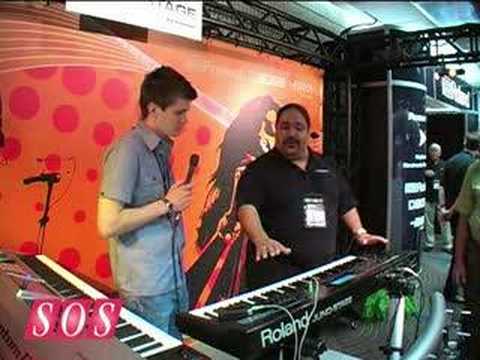
Summer NAMM: Roland Juno-Stage
ManualRoland has made manuals for most of their products available as free PDF downloads.
Specifications
Polyphony -
128 voices (16-part multitimbral)
Oscillators -
128MB Wave Memory (16-bit linear equivalent)
Arpeggiator -
128 Preset, 128 User
Chord Memory: 64 Preset, 64 User
Rhythm Patterns: 256 Preset, 256 User
Chord Memory: 64 Preset, 64 User
Rhythm Patterns: 256 Preset, 256 User
Sequencer -
Song Player: SMF File Format-0/1, Audio File: WAV/AIFF/MP3
Effects -
Multi FX: 3 systems, 79 types, Chorus: 3 types, Reverb: 5 types, Mic Input, Reverb: 8 types
Memory -
Preset Patches: 1027 + 256 (GM2), Rhythm Sets: 32 + 9 (GM2), Performances: 64
User Patches: 256, Rhythm Sets: 32, Performances: 64
User Patches: 256, Rhythm Sets: 32, Performances: 64
Keyboard -
76 keys (with velocity)
Control -
MIDI In/Out, USB
Date Produced -
2008
Resources
Images from Perfect Circuit Audio.
Reviewed August 2008.