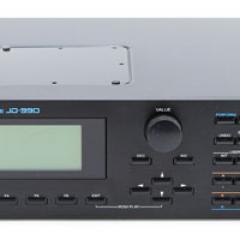
Roland JV-1010
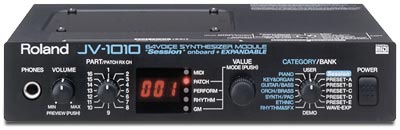
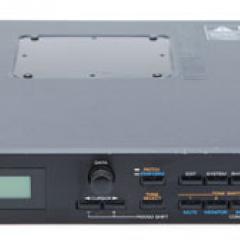
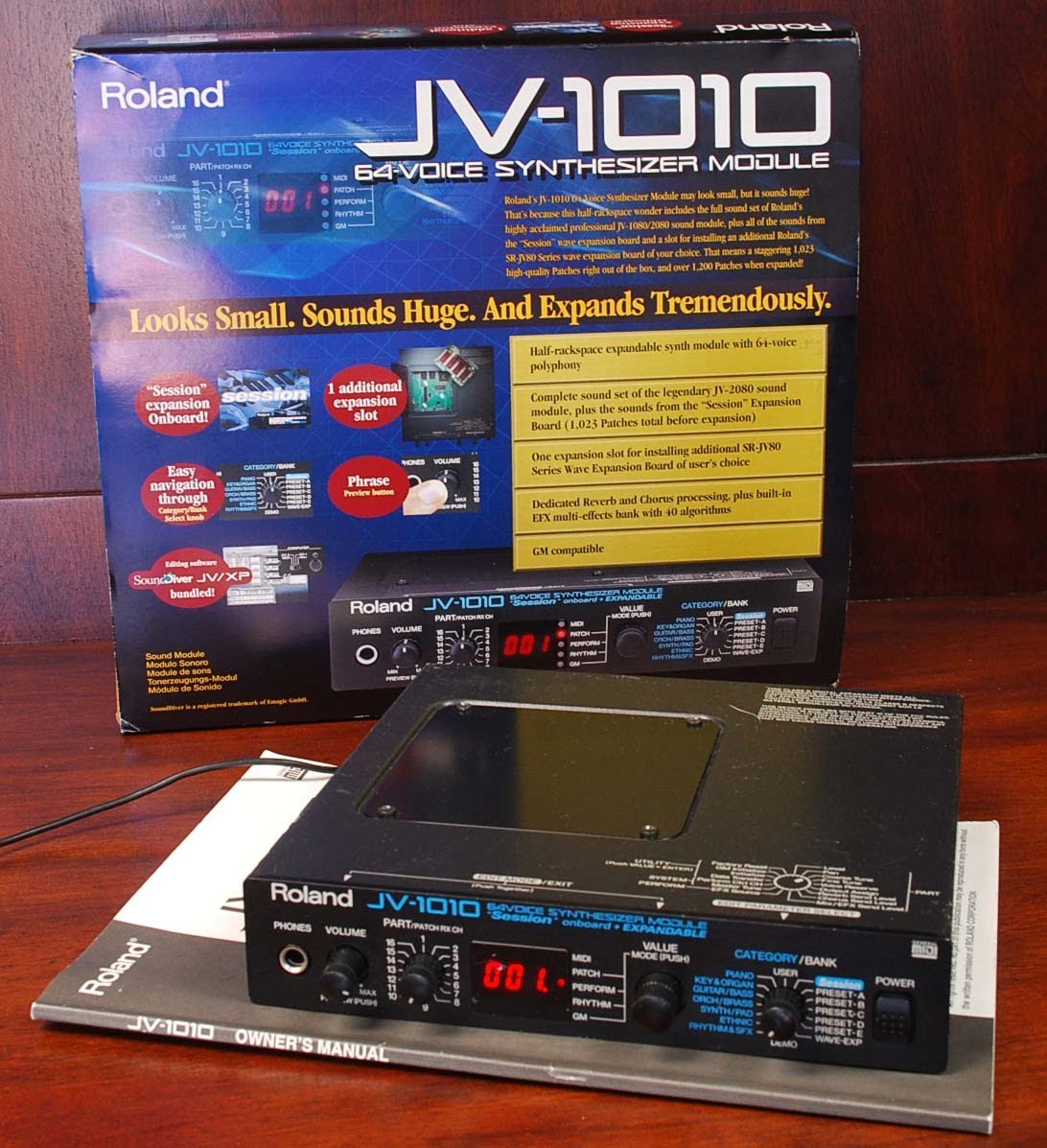
The Roland JV-1010 Synth Module may look like a weakling, but it kicks sand in the face of a lot of synths twice its size! This half-rackspace killer has the full sound set of the professional JV-1080 and 2080 modules (at slightly reduced quality). With 640 preset and 128 user patches, that's a lot of phat sounds in a skinny package. Plus, all 255 sounds from the Session wave expansion board are included. Pristine stereo grand pianos, acoustic guitars, Juno, Jupiter, TB-303, 18 rhythm sets and tons more - the kinds of sounds that inspire and do justice to your musical ideas, whether recorded or live on-stage.
And if you want to add more muscle, the JV-1010 has an expansion slot for any JV80 Series board (Asian, Orchestral, Hip Hop, Techno, Bass & Drums, Vocal, Country, World, etc.). In total, you can get over a thousand patches out of the box and over 1,200 when expanded - all in a 64-voice polyphonic, 16-part multitimbral unit with dedicated Reverb, Chorus and Multi-effects. Sounds are easy to find, too. JV-1010 Patches are grouped into categories (Piano, Key/Organ, Guitar/Bass, etc.) and banks can be selected with a simple Category/Bank Select knob. The innovative Phrase Preview function plays back the selected tone in a short musical phrase.
Roland has also added some valuable extras: Sound shaping and editing can be accomplished via bundled CD-ROM, which includes sound editing software for Mac and PC, used in conjunction with the JV-1010's rear-panel computer serial-interface. The computer interface and the 1010's General MIDI compatability make this an excellent sound module for use with your computer.
Though these sounds are professional all the way, you don't need to be a pro to recognize the JV-1010 as an extreme value. You don't need to be a pro to use it either. If you have a keyboard with a MIDI out and a cable, you're good to go. You'll never be held back by a lack of good sounds again.
You Might Also Like
Demos & Media
Roland JV-1010 ROM Play Demo Songs
Audio Clip 1
This audio demo showcases some of the JV-1010's electronic sounds.
ManualRoland has made manuals for most of their products available as free PDF downloads.
Specifications
Polyphony -
64 Voices
Oscillators -
Digital, LAS, 8MB Samples, 255 sounds
Effects -
Eight Reverbs, One Chorus, 40 EFX Multi-Effects
Memory -
895 preset, 128 user Patches, 32 performances, 18 rhythm kits
Keyboard -
None
Control -
MIDI IN/OUT/THRU (16-parts); Serial Computer Host port
Date Produced -
1999
Websites of Interest
Resources
Images from Robert Frost
Thanks to Jon Axelsson for providing information.