Roland MKS-7
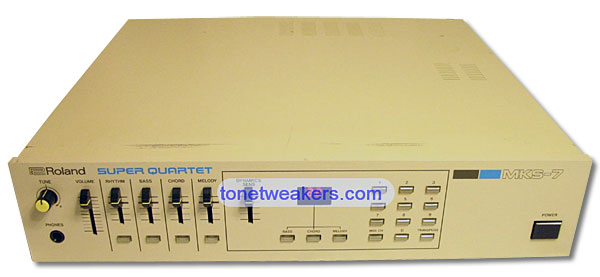
The MKS-7 Super Quartet is a multitimbral synth module with dedicated sections. The Melody section: 2 voice polyphony, 100 presets; Chord section: 4 voice polyphony, 100 presets; Bass section: monophonic, 20 presets; Rhythm section: 11 PCM sounds. The sound and architecture of the Melody, Chord and Bass sections are the same as the Juno 106 synthesizer. The Rhythm section offers up a few basic electronic rock drum sounds borrowed from the TR-707.
The beauty of using this sound module is that all 4 sections are available at once. Drums, bass, leads and pads can all play independent parts and patches together making this a very nice all-in one vintage Roland tone module. Just like the Juno 106, the MKS-7 is also controllable via MIDI and System Exclusive messages for editing. Most Juno 106 editors will work for the MKS-7 too. An underrated machine.
You Might Also Like
Demos & Media
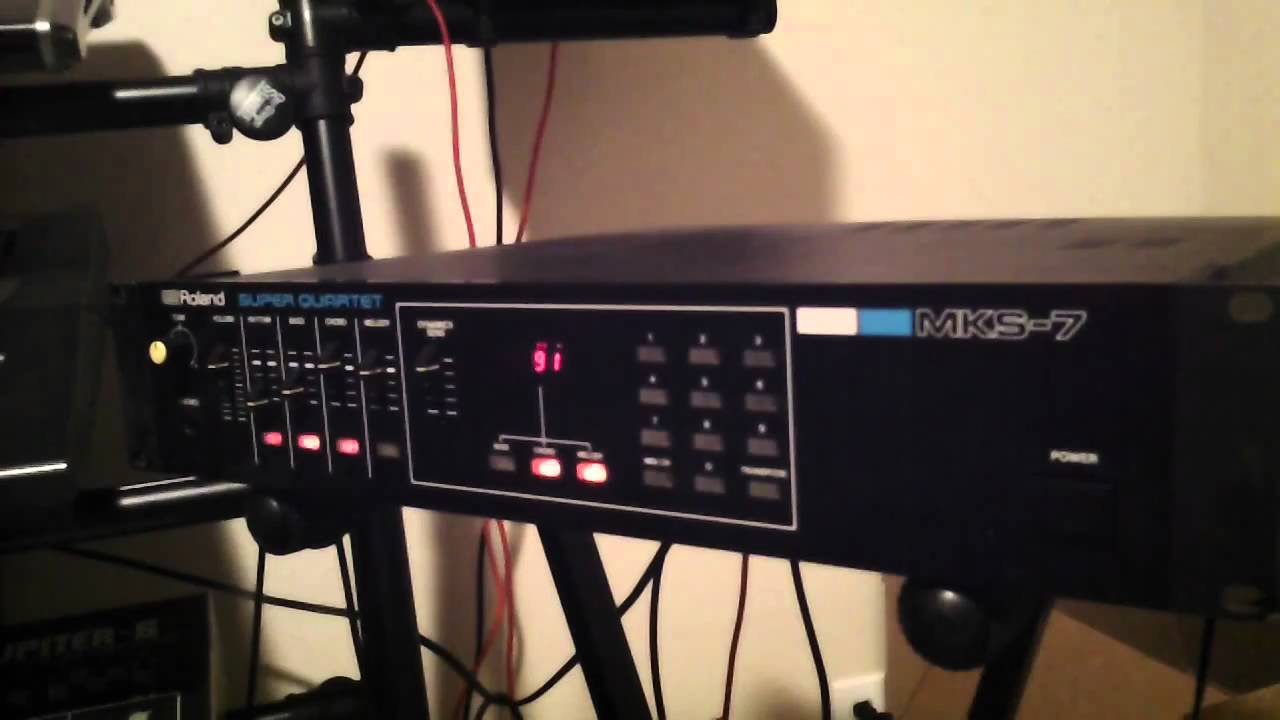
Roland MKS-7 Super Quartet Demo
ManualRoland has made manuals for most of their products available as free PDF downloads.
Specifications
Polyphony -
8 voices
Oscillators -
3 DCOs
Multitimbral -
4 parts
Filter -
non-resonant high pass and resonant low pass
VCA -
ADSR, level and gate
Memory -
120 patches
Keyboard -
None
Control -
MIDI
Date Produced -
1986
Websites of Interest
Resources
Images from Tone Tweakers.