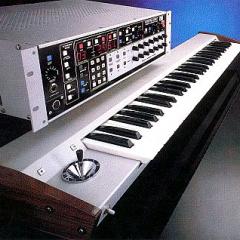
Roland MKS-80
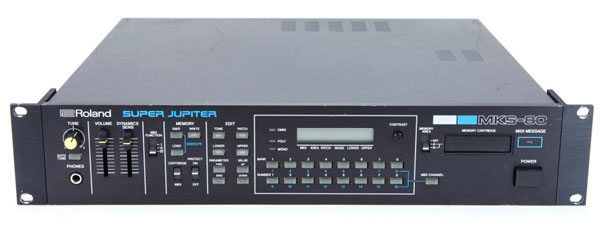
The MKS-80 is basically a refined Jupiter 8 in a module. It is called the Super Jupiter and it is very fat and very analog! Its great sound is due in part to the classic analog Roland technology in its filters, modulation capabilities and a thick cluster of 16 analog oscillators at 2 per voice. It comes in a 2 space rack-module - no keyboard here. Tons of editing capabilities, although editing is tedious. It's got all the classic sounds of the Jupiter synths and so much more. An excellent choice for ambient drones, pads, blips, buzzes and leads.! It is used by Hardfloor, Astral Projection, Vince Clarke, Vangelis, Pet Shop Boys, and Snap. Use the MPG-80 for easier and more traditional slider control when editing the MKS-80.
You Might Also Like

Demos & Media
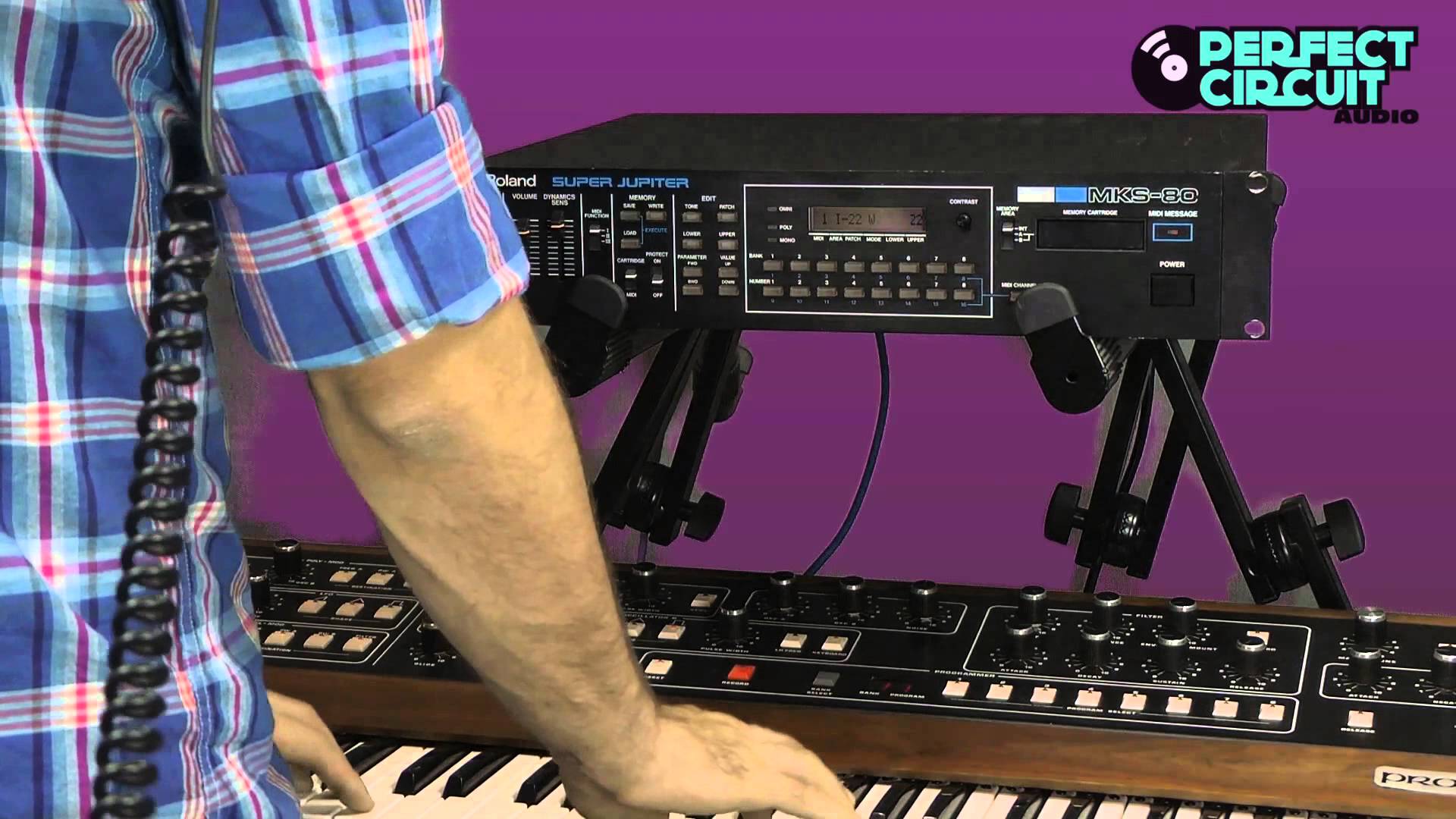
MKS 80 Overview
Roland MKS-80 demo
Audio Clip 3
Some tones from the Super Jupiter that give just a taste of the full breadth of the analog power inside.
ManualRoland has made manuals for most of their products available as free PDF downloads.
Patch FileRoland's original Factory patches for the MKS-80. There are several patches in .mid and Midi SysEx formats, for Macintosh and Windows/PC.
Specifications
Polyphony -
8 voices
Oscillators -
16 Oscillators at 2 per voice!
Memory -
64 single, 64 combination
Filter -
Low pass filter w/ ADSR, Hi pass filter
VCA -
Standard ADSR
Arpeg/Seq -
None
Keyboard -
None
Control -
MIDI
Date Produced -
1984
Websites of Interest
Resources
Images from Perfect Circuit Audio.