Sequential Circuits Six-Trak
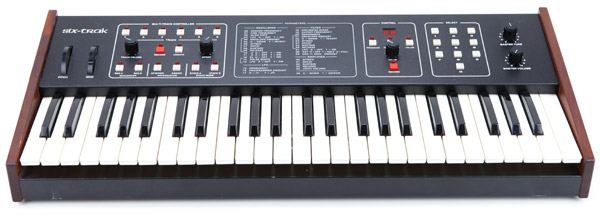
The Six-Trak is Sequential's beginner synth. It has typical Sequential sounds in an analog six oscillator, six voice synth. It is not fun to program, there is only one knob and you need to assign the parameter you wish to adjust to this knob. The assignment settings for the various parameters are listed in the center of the front panel. It does however feature MIDI with controllers for its parameters to make editing easier using a computer program such as Unisyn or other external MIDI controller.
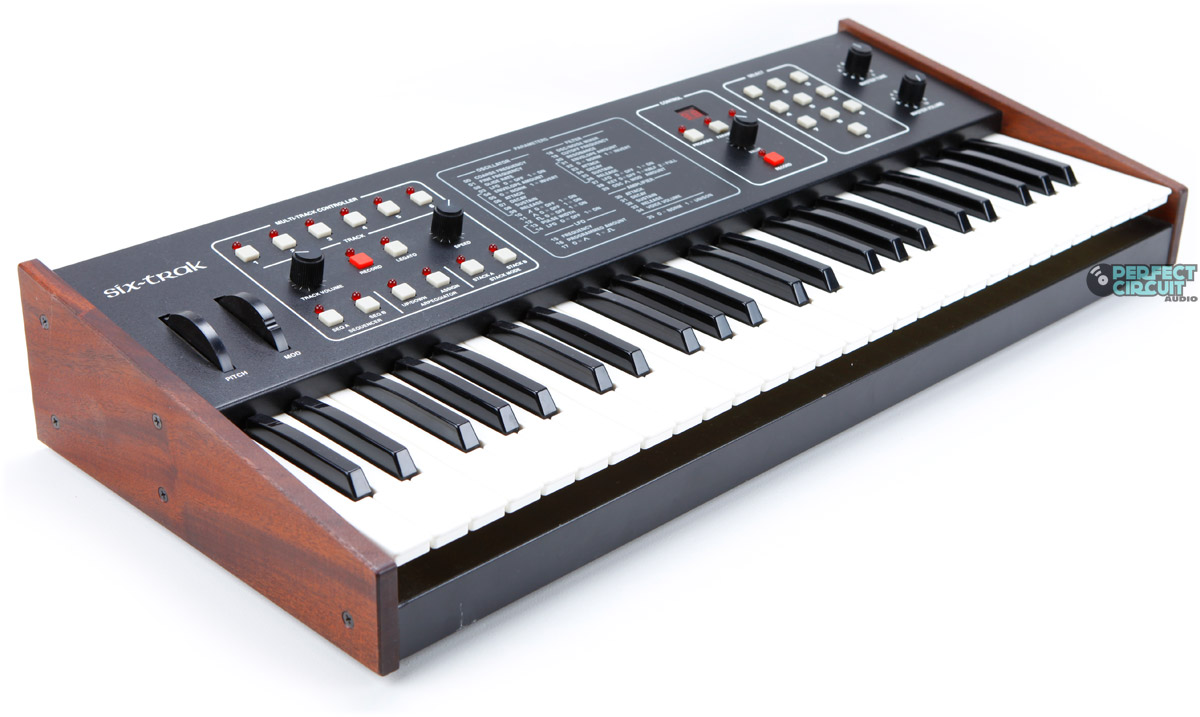
The Six-Trak features two operational modes: Polyphonic Mode and Unison Mode. In Unison mode, with all six oscillators, this baby gets fat, rich, creamy and wild making it an excellent stand-in for Moog-like sounds. Also, the Six-Trak is capable of interesting and complex sound effects, mostly thanks to useful cross modulation and the six oscillators. It also includes a simple 6-channel on-board sequencer (of little usefulness these days). Its biggest limitations were: shortest attack too slow for really percussive sounds, smallest vco frequency adjustment too big for Zawinul-style subtle frequency envelopes & LFO, and the lack of built-in chorus, which would have helped to thicken the rather thin sounds in Polyphonic mode. The SixTrak can be fun and cool but is overshadowed by its cousin - the Multi-Trak. It is used by Überzone and Cirrus.
You Might Also Like

Demos & Media
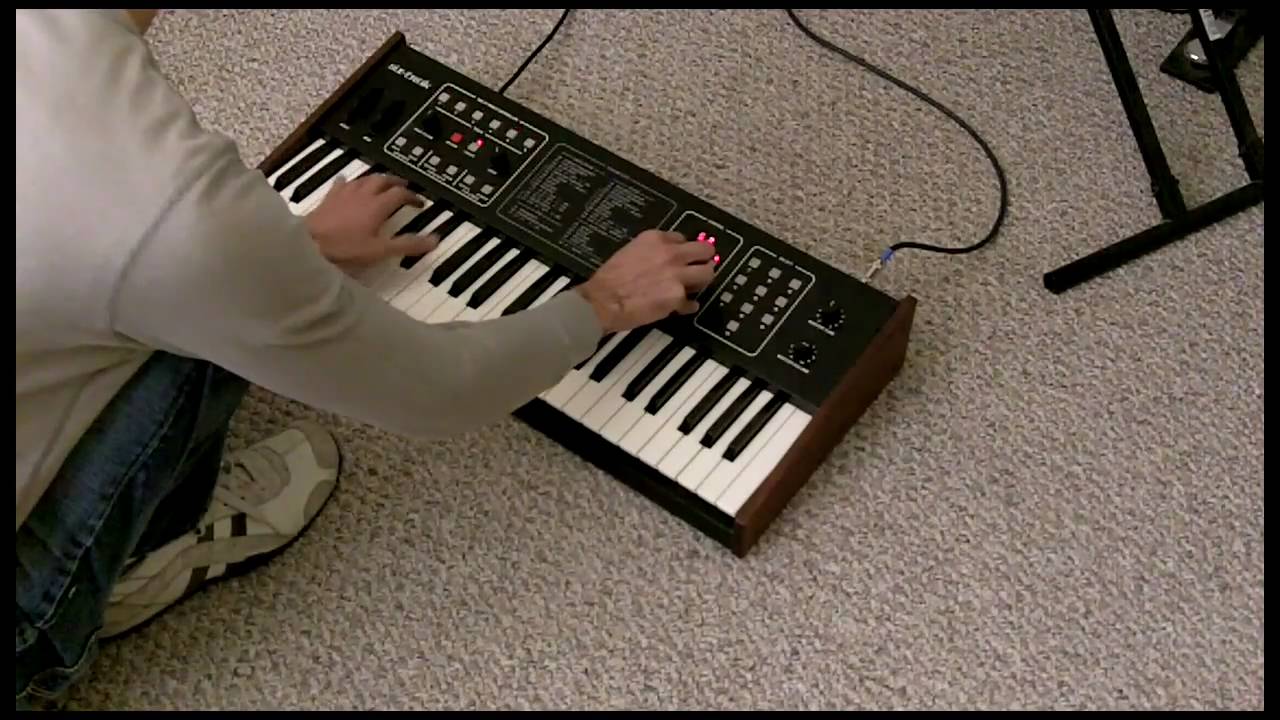
Some nice sequenced Bass Lines
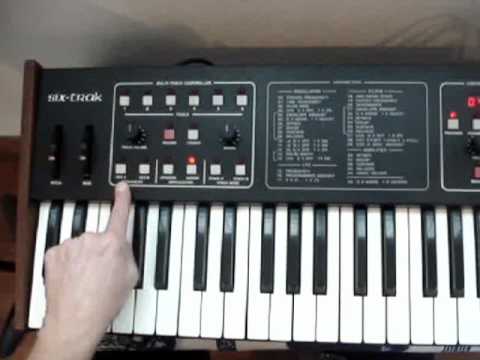
Showing how to use the Six-Trak
Audio Clip 1
Demos of the Factory Sounds, by Moimir Papalescu.
100 SysEx PatchesThese are Midi SysEx patches by Jeff Bergman. They are for Macintosh and Windows/PC.
Factory PatchesThese are Midi SysEx patches from Moimir Papalescu.
Cubase Mixer-MapMixer maps for the SixTrak & Max by Grant Ransom & John Goodman for Windows/PC. Courtesy of NoteIt.
MOTU ConsoleMixer maps for the SixTrak & Max by Grant Ransom & John Goodman for Mac. Courtesy of NoteIt.
ManualDownload the original owner's manual from SoundProgramming.net.
Specifications
Polyphony -
6 Voice Polyphony and 6 part Multitimbral
Oscillators -
6 VCO's (sawtooth, triangle, variable width)
Memory -
100 patches
Filter -
24 dB/oct lowpass w/ ADSR envelope
VCA -
Standard ADSR
LFO -
Yes
Keyboard -
48 keys
Arpeg/Seq -
Arpeggiator (up/down) and 2-Track sequencer (up to 800 notes)
Control -
MIDI (all parameters are midi controllable)
Date Produced -
1984
Websites of Interest
Resources
Images from Perfect Circuit Audio.
Additional info submitted by Jeff Learman.