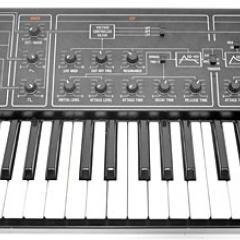
Yamaha CS-40m

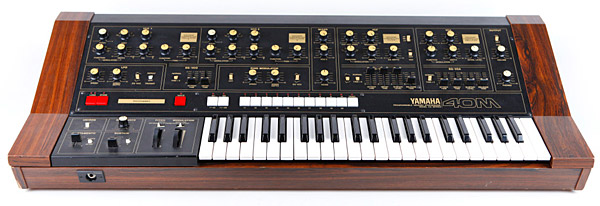
Yamaha CS-40m Image

(click to enlarge)

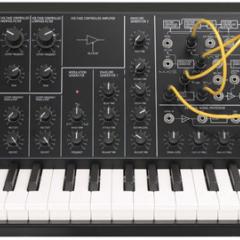
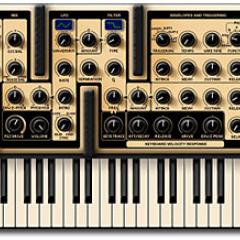
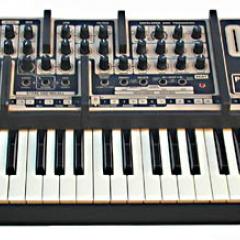
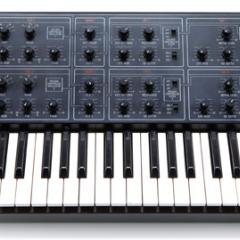
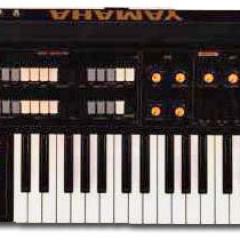
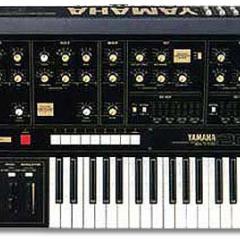
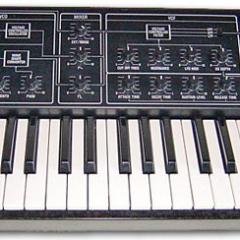
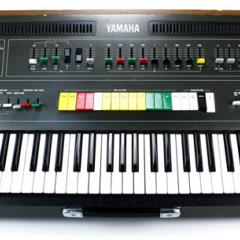
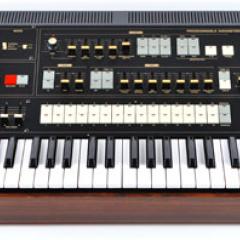
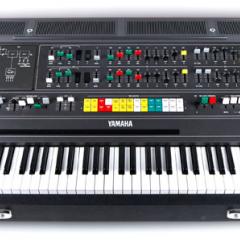
The CS-40m is a duophonic (2-voice) analog synthesizer that was introduced in 1980. Although Yamaha had already conquered polyphony with their legendary 8-voice CS-80, the CS-40m offered a more affordable approach to something other than a mono-synth. It has a semi-compact 44 note (3 1/2 octave) keyboard, 36 knobs, 12 sliders and over a dozen buttons for easy hands-on performance and editing. There are also 20 patches of memory which can be off-loaded to cassette tape.

The CS-40m certainly isn't as phatt as the CS-80. In fact, the CS-40m is more like a 2-voice version of the CS-20m. Like most CS-series synths the CS-40m has two analog oscillators per voice. Triangle, sawtooth, and square (pulse) waveforms are available on each oscillator, plus there is a noise generator. There is also a simple AR (attack/release) envelope generator for each VCO.

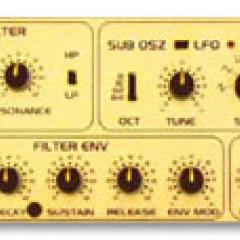
The CS-40m has a multi-mode VCF filter switchable between lowpass, bandpass, and highpass filtering. Basic filter cutoff and resonance controls are here, but the filter's resonance can't be driven to self-oscillate. It does, however, have its own ADSR envelope generator for nice sweeping filter effects. There is a basic LFO (Low Frequency Modulator) for modulating the VCO, VCF or VCA. All these classic controls and features and sounds... you would expect wood panels... and there are! The CS-40m has been used by Electronic Dream Plant, Sneaker Pimps, Ultravox, Duran Duran, and Vangelis.


11 VISITOR COMMENTS

zaiusz
April 21, 2012 @ 12:37 am
This thing is a secret weapon... enormous bass, soft pads, superb buzzy multimode filter. Excellent for modern bass heavy electronic music. One thing I really enjoy with this one, using a guitar synth with a midi/cv converter. By setting one of the voices to low note and the other to high note priorities using say a pro2000, slowly strumming a chord sounds incredible; like nothing I've ever heard. The low note always stays low but as you strum up the other note glides higher and higher.

I've made sure to keep this one in my arsenal due to it's unique sound and flexibility. 5/5
Mark
April 16, 2012 @ 10:42 am
I am an original purchaser of the CS40M from 1980, it has been in my mothers basement until recently for too long, but is is perfect condition and rarely left the basement except for occasional high school rock band practice oh so many years ago. My son is now smitten with it. He would love a patch book, with sound settings, not sure if that was ever created by Yamaha or shared among owners. You are so right about being large and heavy!
james pilcher
December 22, 2011 @ 11:30 am
stu - the gate in's on the CS series are S-trig, as in, if you short the contacts on the plug, the envelope generator should trigger. Whatever you're controlling them with might have a different trigger system. You could try plugging a guitar lead into the gate then manually shorting the contacts on the jack plug with something conductive to test them. I've done it to my cs-15 a few times when i was building a cv-gate controller for it, but even though i have no reason to think it can harm your synth, you would do this at your own risk.
Stu
December 18, 2011 @ 8:17 pm
so I've had one for about a month now and am really impressed. it make some wicked, far out sounds! theres a third env that can controll everything, even the lfo spd! i wish it were useful via cv but gate in for some reason doesnt trigger this feature. odd, gate in doesnt trigger the vco env on the CS15 either :( but for playing lead keys, this is quite possibly the coolest lil synth ive ever got my hands on!
GA
October 29, 2011 @ 10:26 am
This was my first synth back in about 1984-1985. I wish I had it back!
 
Post Comment!
VSE Rates It

It’s Good

You Rate It

Rated 4.4 (516 Votes)

  • Demos & Media
  • YouTube Thumbnail
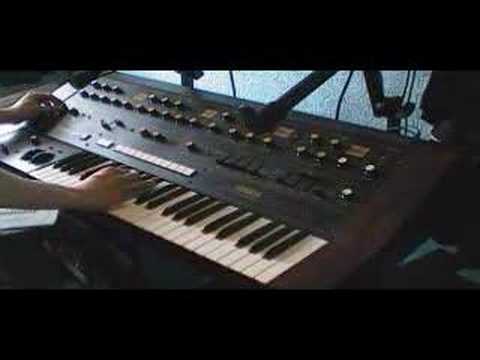
    Video 1
    - Yamaha CS-40M

    Manual - Download the original owner's manual from SoundProgramming.net.

  • Specifications
  • Polyphony - (2-voices) Duophonic
  • Oscillators - 2 VCO's + noise gen. Triangle, Sawtooth, Square (Pulse) waveforms.
  • LFO - Waveforms: sine, up-ramp, down-ramp, square, and sample-and-hold.
  • Filter - multimode: Low-, Band-, High-Pass w/ cutoff, resonance, and ADSR envelope controls
  • VCA - ADSR (x5 switch)
  • Arpeg/Seq - None
  • Effects - None
  • Keyboard - 44 keys (3 1/2 octaves)
  • Memory - 20 patches via 2 banks of 10 presets; external cassette interface
  • Control - CV/Trigger outputs for each voice and CV inputs for portamento, sustain, brilliance, volume and filter.
  • Date Produced - 1980 - 1986

Errors or Corrections? Send them here.