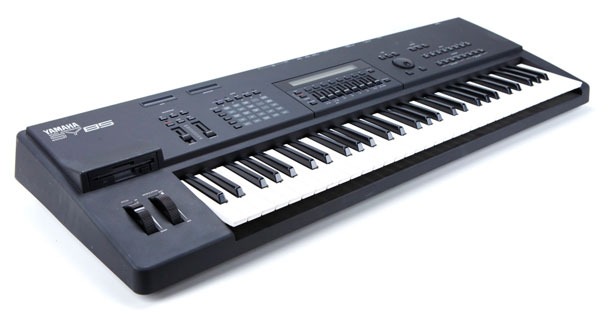
Yamaha SY85
In the early 1990's most synth manufacturer's quest to use digital forms of synthesis to re-create acoustic sounds (as well as analog sounds) led to an onslaught of rather boring instruments. Among the mob of digital synths some stood out such as Korg's M1, Roland's D-50, and Yamaha's SY85. Fading away were the days of Yamaha's FM-synthesis, replaced by Advanced Wave Memory (AWM2). Throughout the 1990's Yamaha used AWM2 in many of their successful products because of its high sonic quality and advanced synth-like editing features. The SY85 was a powerful workstation keyboard capable of some great sounds and full arrangements.
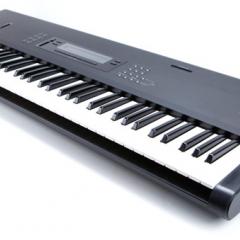
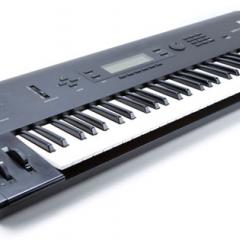
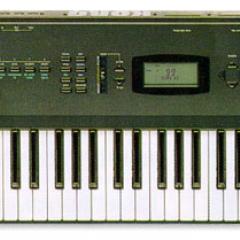
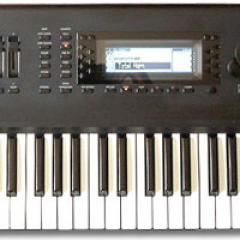
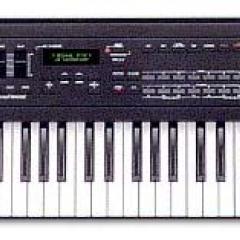
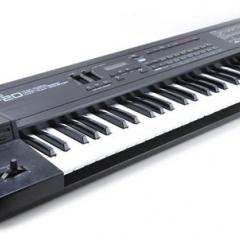
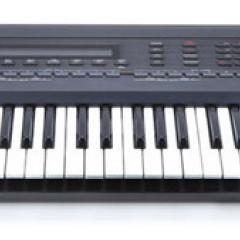
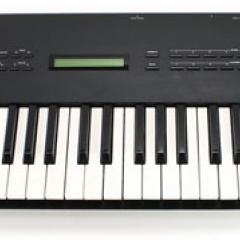
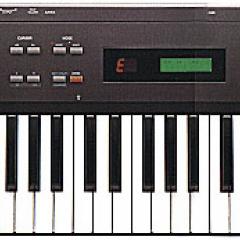
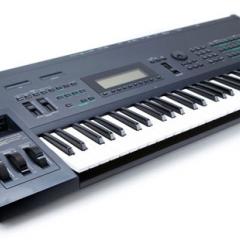
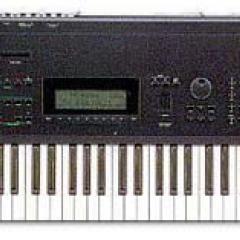
It's a 16-part multitimbral MIDI synth with a nice 61-note keyboard designed to be the main keyboard in your MIDI studio, with tons of sounds and sequencing features built-in. It has a long but narrow 40 character x 2 line LCD display and a 5x5 mode selection matrix which enhances operation by allowing fast easy access to any of the SY85's modes. In addition to pitch & modulation wheels and dual output level controls, the SY85 has eight slide controls that can be used to control a range of parameters while performing for expressive real-time power. Best of all it's got multi-mode filters and a dual-effects processor with chorus, flange, reverb, delay, exciter, parametric EQ, echo, ring modulation, leslie, distortion, etc. The effects can be used in series or parallel, and there are 4 busses to route sounds through them. Other features include a 3.5" floppy disk drive, external memory card slots and two assignable stereo outputs.
You Might Also Like

Demos & Media
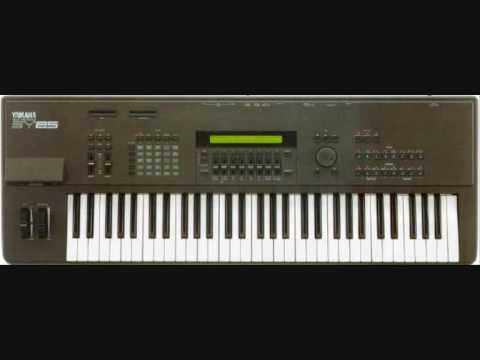
YAMAHA SY85 KEYBOARD WORKSTATION ROCK DEMO H-WHY
ManualDownload the original owner's manual here.
Specifications
Polyphony -
32 voices
Oscillators -
AWM2 (2nd-generation Advanced Wave Memory)
Filter -
Digital LPF, HPF, BPF, BEF (Band Elimination Filter)
Sequencer -
9 tracks (8 normal+1 rhythm) 20,000 note capacity, 100 patterns, 10 Songs
Effects -
2 Discrete FX units, each with 90 effect types (Chorus, flange, reverb, delay, exciter, EQ, ring modulation, leslie, distortion, etc.)
Keyboard -
61 keys (w/ velocity and aftertouch)
Memory -
Wave ROM: 6 MB.
Wave RAM 0.5 MB.
Expandable to 3.5 MB
Wave RAM 0.5 MB.
Expandable to 3.5 MB
Control -
MIDI (16-part multitimbral)
Date Produced -
1992
Websites of Interest
Resources
Images from Perfect Circuit Audio.
Thanks to Robert Uhlmann for contributing.