Yamaha YS200
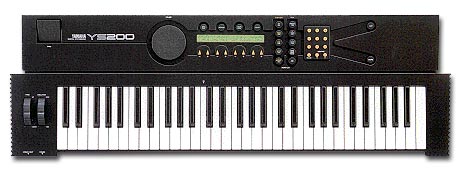
Yamaha YS200
The YS200 is a 4-operator digital FM synthesizer in a rather funky looking keyboard design released in 1988. It featured an 8-track on-board sequencer with many advanced edit functions and up to 8 song capacity. It has a 61-note velocity/aftertouch sensitive keyboard, can hold up to 300 patches, two LFO's, vibrato, and more. It tends to produce very deep dance/techno basses, eighties digital synth sounds, and new age sounds.It uses the same synthesis as the TX81Z, which means it has 8 waveforms to choose from rather than just sinewaves, which gives it a wide range of possible sounds.
The complexity of FM synthesis is somewhat relieved by the "Easy Edit" controls for basic editing operations, but this can also be limiting since not all parameters are accessible. Full editing of the patches requires a MIDI based patch editor, such as YSEditor, which is available for free but only for the Atari ST. Fortunately, it works on Atari ST emulators for the PC. It's worth the trouble because it allows you to load up your YS with original patches from the TX81Z and some of Yamaha's other classic 4-operator DX synths, making the YS a good way to get your hands on classic patches from several keyboards all in one box.
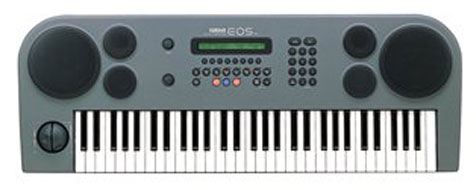
Yamaha EOS B200
The Yamaha B200 is essentially a YS200 with speakers and a more subdued appearance. The B200 uses rather powerful 2 x 20W speakers and also has a stereo line-in (for amplification only). The pitch and mod wheels on this version form two halves of a sphere, which looks modern but ends up being a bit awkward. In Japan, the B200 was called the "EOS B200".
You Might Also Like
Demos & Media
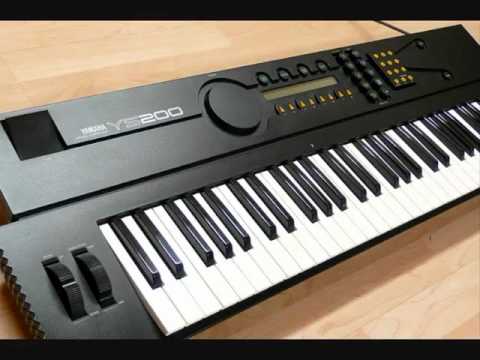
YS200 Demo video
Specifications
Polyphony -
8 voices
Oscillators -
4-Operator Digital FM synthesizer
#Instruments -
8 parts
Filter -
None
Effects -
reverb, delay and distortion
Keyboard -
61 keys (w / Velocity and Aftertouch)
Memory -
100 Preset, 100 User, 100 more via External Card
Control -
MIDI IN/OUT/THRU, Breath Controller Input
Sequencer -
8-Track, 8 songs (w/ quantization, cut, copy, paste, insert, punch, and more)
Arpeggiator -
None
Date Produced -
1988
Websites of Interest
Resources
Images from Synthony.
Info provided by Adam Deslauriers and GTmusic.