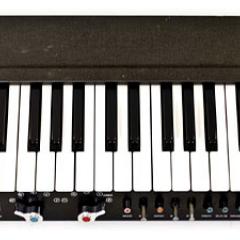
Korg Maxi-Korg 800DV
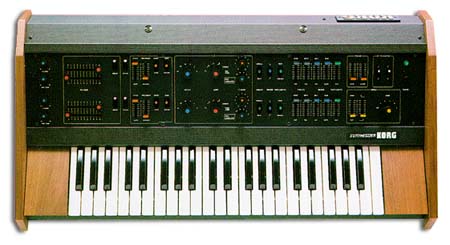
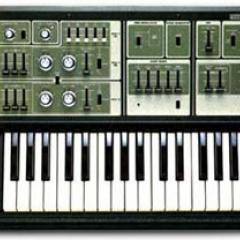
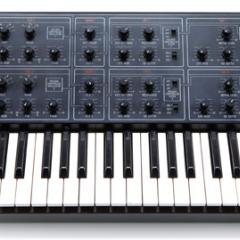
A popular duophonic/monophonic classic from Korg. It's got 2 analog oscillators that can be used for one fat monophonic sound or 2 VCO's per voice for a fat duophonic sound. Flexible design with 2 voltage controlled filters and even a ring modulator. The Maxi-Korg is a great source of early Korg sound that rivals competitors like the OSCar and Roland SH-synths. No MIDI, no memory, but good bass and screechin' leads! It has no CV input either, though it can be modified to accept externnal control from the less standard Hz/V protocol (also used by Yamaha).
Most people usually understand it best as two separate MiniKorgs inside one keyboard with all the controls to both. Most people will stack both voices as the triggering can be tricky as duophonic. It has the very effective ability to delay one voice before it triggers when played mono. It has been used by Kitaro, Vangelis and Soft Cell.
You Might Also Like
Demos & Media
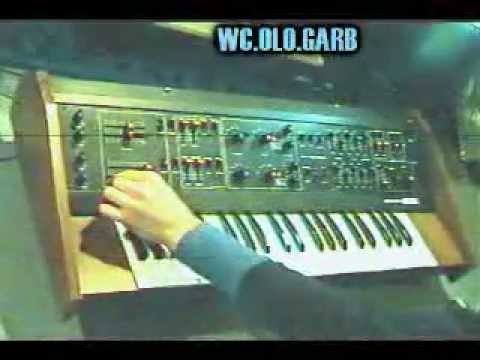
Korg 800 DV | demo
Specifications
Polyphony -
2 - Duophonic
Oscillators -
VCO x2: Scale (64', 32', 16', 8', 4', 2'), Waveform (triangle, square, sawtooth, pulse, PWM), Pink Noise, White Noise; SUB OSC x2: Scale (32', 16', 8', 4', 2')
LFO -
LFO x2: PWM + Vibrato
Filter -
VCF x4: Traveler (High Pass, Low Pass)
VCA -
VCA x2 + ENVELOPE GENERATOR x2: Attack Time, Singing Level, Range Selector, Mode Selector
Keyboard -
44 Keys
Memory -
None
Control -
None
Date Produced -
1975
Websites of Interest
Resources
Images from Korg Electronic Music Instruments Vol. 5 (catalog).
Additional information provided by Nick Kent.