Roland XV-3080
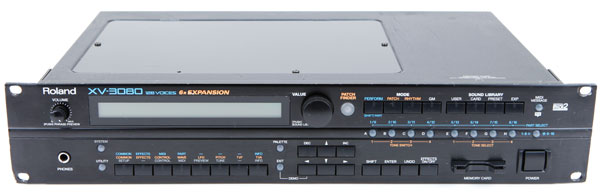
Roland XV-3080
The XV-3080 is a 128-voice professional synthesizer that picks up where the classic JV-series synthesizers left off. With a massive 128 voices, the XV-3080 is capable of extensive layering and multitimbral applications! There are true stereo waveforms per tone, expressive Matrix Control, expandability via new 64MB SRX (when converted into 16-bit linear format). The sounds include those from the JV-2080 plus many more new sounds and waveforms from the JD-990 and Super JD.
The XV-3080 has plenty of quality built-in digital effects including reverb and effects derived from Roland SRV-3030, V-Studios, and RSS technology. Programming the XV-3080 is in-depth but intuitive and well documented. There's a Patch Finder for quickly finding sounds sorted by type, as found on the JV-2080. Programming the new Matrix Control gives sounds an unprecedented level of nuance! It is apparent that Roland has packed the most professional features from their hottest synthesizers into a new and improved workhorse module - their "most expressive instrument ever"!
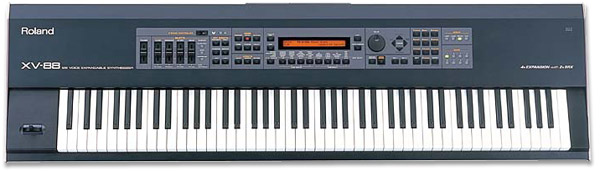
Roland XV-88
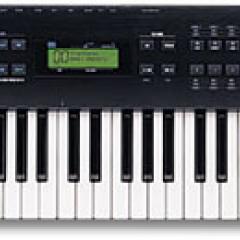
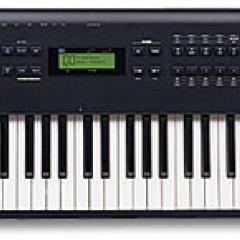
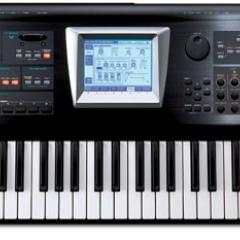
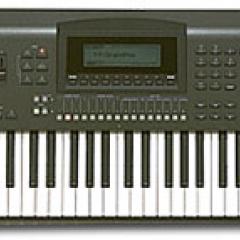
The XV-88 is essentially a professional keyboard version of the XV-3080. It has 88-note precision hammer-action keyboard with velocity and aftertouch sensitivity. It has 4 real-time control/tone palette sliders, D-Beam technology, and all of the advanced sounds, effects and Matrix Control found in the 3080. The XV-88 has been used by Rick Wakeman and Yes. The XV-5080 has an enhanced front panel with a giant JV-2080 style LCD display. The XV-5080 can also load and playback S-700 and Akai sample libraries via SCSI, can hold up to 128 SIMM RAM memory, eight channels of 24-bit R-Bus digital output, S/PDIF digital output and enhanced COSM effects processing.
You Might Also Like
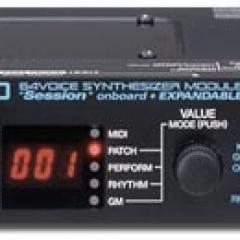
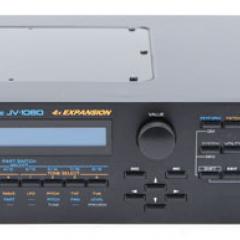
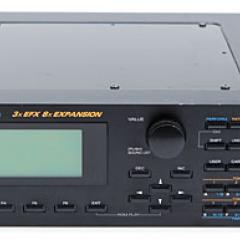
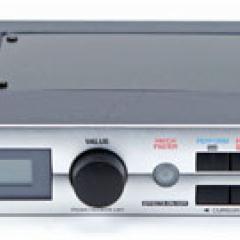
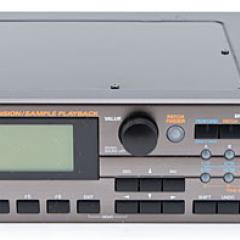
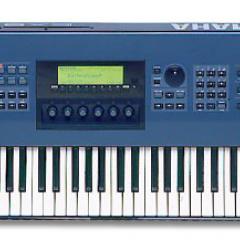
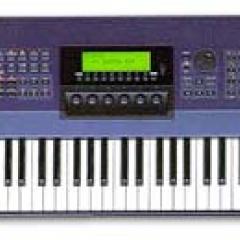

Demos & Media
Audio Clip 1
Dance sounds, orchestral sounds, pianos, drums and more on-board demos!
ManualRoland has made manuals for most of their products available as free PDF downloads.
Specifications
Polyphony -
128 voices
Oscillators -
64MB of internal wave memory gives 1083 waveforms (including all JV-2080 sounds and waveforms and 112 waveforms from the JD-990).
Expandable with SR-JV80-Series wave expansion boards and XP/JV-Series Patches, 4 slots.
Expandable with SR-JV80-Series wave expansion boards and XP/JV-Series Patches, 4 slots.
Sampler -
None. See Roland XV-5080.
Modulation -
Matrix Modulation - 4 destinations per source to modulate for unprecedented level of nuance
Effects -
Studio-quality reverb and effects derived from Roland SRV-3030, V-Studios, and RSS technology
Memory -
Patches: 1152; Performances: 96
Keyboard -
XV3080: None
XV88: 88-note hammer-action keyboard with velocity and aftertouch
XV88: 88-note hammer-action keyboard with velocity and aftertouch
Control -
MIDI
Date Produced -
2000
Websites of Interest
Resources
Images from Perfect Circuit Audio.