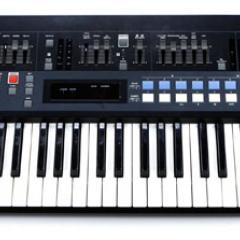
Akai X7000
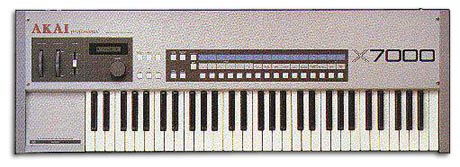
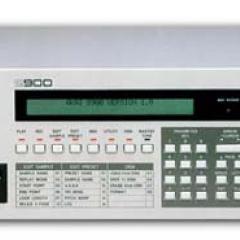
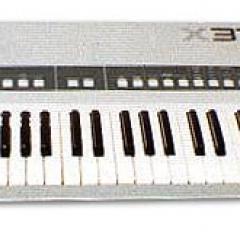
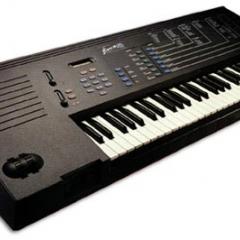
The X7000 was Akai's first major Sampler Keyboard instrument similar in style and format to the E-mu Emax, Ensoniq Mirage, EPS and Roland S-10 sampling keyboards. The X7000 has about the same sampling features as the rack-mount S-900, which were great in 1986. Variable 12-bit sampling up to 40kHz, 128K RAM for storing only a few seconds worth of samples and a complete suite of basic sample editing functions including looping, auto-looping, truncating, multi-sampling and re-sampling capabilities, tuning and so on. It even features a few dedicated parameter buttons above the keyboard for quick access to the LFO and other modulations.
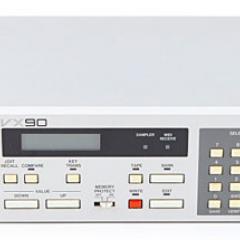
This sampler sounds pretty good. It's got a lo-fi edge due to the fact that it's only a 12-bit rather than 16-, 20- or 24-bit sampler. The slow 2.8" built-in disk drive is not exactly compatible with much. But you can use it to store your samples or load samples from libraries for Akai's S-612, S-700 and X7000. Editing samples is straight forward and makes this synth a great entry-level sampler. However, the LCD display is small so editing can be tedious. It also features a cool analog-like filter with cutoff. But for enhanced analog-like editing, the X7000 can be hooked up to the AX73, AX60 and VX90 synthesizers via the DD-X5013 Voice Cable so you can run the X7000's samples through these synth's analog circuitry.
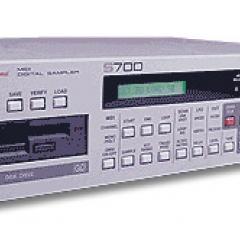
The built-in keyboard makes the X7000 good for performances and it also makes a good first Keyboard for any budding musicians looking to get into sampling - either for cheap or for some lo-fi sampling. However, it does have advanced functions for users looking for some more elaborate or malleable sounds. These include the multi-sampling and re-sampling functions, sample reversing and alternating, keyboard splitting, and the option to upgrade using the Expansion Memory PCB which increases the number of samples available to 16 and boosts multi-sampling from 6 to 16 splits. There was also a rack-mount version, the S-700, also a few leaps ahead of the original S-612 but also still a couple steps behind the classic S-900. The X7000 has been used by The Chemical Brothers.
You Might Also Like
Demos & Media
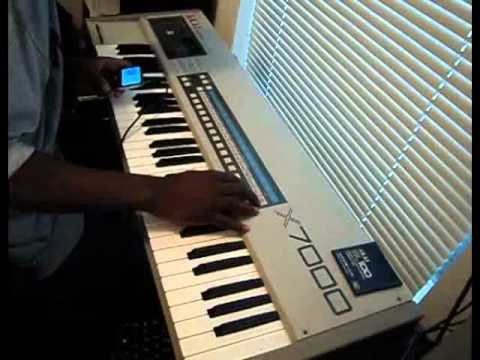
Sampling on the Akai X7000
Akai x700 12bit Sampler and Amiga 1200
ManualClick this link to download the owner's manual.
Specifications
Polyphony -
6 voices
Sampler -
12-bit linear, 4kHz - 40kHz variable sampling rates
VCA -
Release Time Control (Decay)
Effects -
Vibrato from the LFO
Arpeg/Seq -
None
Keyboard -
61 keys with velocity
Storage -
128K internal RAM (8 seconds at 4kHz); 2.8" Quick Disk (QD) External storage
Control -
MIDI
Date Produced -
1986
Websites of Interest
Resources
Images from Synthony